The House votes to roll back emergency tariffs as the Senate and the Supreme Court weigh executive trade powers
Tariffs are once again at the center of debate in Washington.
The House recently voted to roll back emergency tariffs on Canada — extra sales taxes on stuff from other countries — imposed by President Trump. The resolution now moves to the Senate and comes as the Supreme Court reviews the legal basis for the White House’s tariffs. Here’s what happened — and what it could mean.
The House Reclaims Tariff Authority
The House recently held two votes asserting more control over tariffs.
The first was simply to allow tariffs to be challenged. House Republican leadership had previously limited the chamber’s ability to vote on ending President Trump’s emergency tariff authority.
That rule had to be overturned by a majority vote before the House could focus on individual tariffs. On February 10, three Republicans: Rep. Don Bacon, Rep. Kevin Kiley, and Rep. Thomas Massie joined all House Democrats in overturning the rule.
With that authority restored, the House voted on February 11 to end the tariffs on Canada by a vote of 219–211. Six Republicans — Rep. Don Bacon, Rep. Brian Fitzpatrick, Rep. Jeff Hurd, Rep. Kevin Kiley, Rep. Thomas Massie, and Rep. Dan Newhouse — joined nearly all House Democrats in support. This vote would not eliminate all tariffs on Canada, but it would affect the 2025 emergency tariffs imposed under a presidential emergency declaration. Currently, those tariffs apply 35% to most non-energy goods and 10% to energy products that do not qualify under the USMCA. If this resolution becomes law, the emergency tariffs would be lifted, and Canadian goods would return to the lower tariff levels prescribed by the U.S.–Mexico–Canada Trade Agreement (USMCA).
Lawmakers may soon bring a similar vote targeting emergency tariffs on Mexico.
Senate Consideration
The bill to end the Canada tariffs now moves to the Senate. Because it was introduced under the National Emergencies Act, it receives special treatment: it cannot be filibustered. It only requires a simple majority (51 votes) to pass, not 60 votes like most legislation.
If 51 senators vote yes, the measure goes to the president. If it fails, the tariffs remain in place.
The Veto Power
But even if the Senate passes the bill, the job is not done. The president must sign it before it can become law, and it’s hard to imagine the President will change course on one of his signature policies.
President Trump would most likely veto the bill and keep the tariffs in place. As it stands, there would not be enough votes to override a veto. For all intents and purposes, these bills to end the tariffs are mostly symbolic.
Supreme Court Case
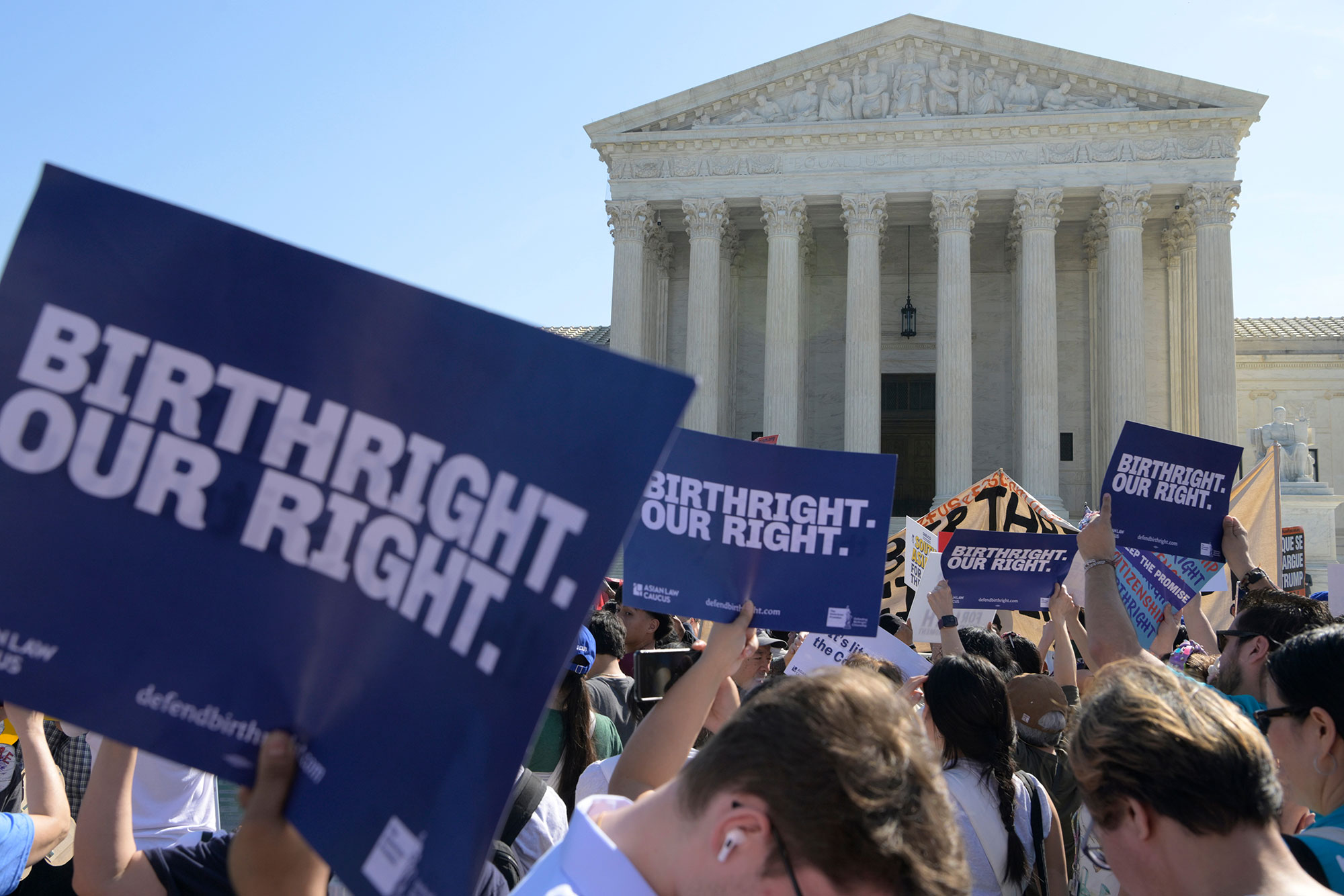
Separate from Congress, the Supreme Court of the United States is reviewing presidential authority to impose tariffs under emergency and trade laws. The emergency tariffs were imposed on major trading partners such as China, Canada, and Mexico — with rates reaching as high as 35% on certain imports — before later expanding to dozens of additional countries across Asia, Africa, and Latin America under a reciprocal tariff framework.
The president relied on the International Emergency Economic Powers Act (IEEPA) to justify those actions. The Court is now examining whether that statute permits tariffs of this scope, how much authority Congress delegated to the executive branch, and whether meaningful limits apply. The justices could uphold the current approach, restrict it, or draw clearer boundaries for future administrations.
What’s at Stake
The Constitution gives Congress authority over foreign commerce — including tariffs. Over time, however, Congress has delegated certain tariff authorities to the president through major statutes, such as the Reciprocal Trade Agreements Act of 1934, the Trade Expansion Act of 1962 (Section 232), the Trade Act of 1974 (Sections 201 and 301), and, most recently, the International Emergency Economic Powers Act (IEEPA), which underpins the current emergency tariffs.
Presidents of both parties have used those delegated authorities to shape automotive supply chains, cross-border manufacturing, energy imports, and agricultural exports – often without new legislation.
This is about more than tariffs. It is about how trade power is divided between Congress and the presidency, and how that balance may evolve in years ahead.
Related

Austin Milks
Austin Milks is Deputy Research Director at No Labels. He has a degree in Political Science from the University of Wisconsin-Whitewater and a JD from Valparaiso University. He has worked for numerous campaigns over the last fifteen years.