


Americans are paying more for housing, energy, and infrastructure than they should—and a tangled web of regulations is often to blame. If Congress could manage to pass an ambitious “permitting reform” bill, it could be one of the most consequential changes for everyday families struggling with rising costs.
Recent bipartisan interest in permitting reform suggests political leaders are beginning to understand what’s at stake. Whether it’s building semiconductor factories to compete with China, constructing charging infrastructure for electric vehicles, or simply making housing more affordable, faster permitting is essential to addressing the challenges Americans care about most.
On November 20, 2025 Democratic Congressman Jared Golden (ME-02) celebrated the House Natural Resources Committee’s passage of his bipartisan Standardizing Permitting and Expediting Economic Development (SPEED) Act, which he first introduced with Republican Chairman Bruce Westerman (AR-04) in July.
The bill, which would modernize the National Environmental Policy Act (NEPA) to accelerate federal approval of energy development and other construction projects, was approved with bipartisan support by a vote of 25-18.
While Golden is leading the charge on permitting reform, he’s not the only member of Congress working towards permitting reform in a bipartisan way.
No Labels has convened a bipartisan, bicameral working group to tackle permitting reform and in fact it was the subject of our latest public Meeting to Make Congress Work.
We here at No Labels are supporting our bipartisan allies in Congress who understand that permitting reform might help America build again.
Consider what happens when you want to build almost anything in America today. A new apartment building in San Francisco can take over five years just to get permits approved. A transmission line to carry renewable energy across state lines might require approvals from a dozen different agencies, taking up to a decade. Even adding a few units to an existing property can mean navigating a bureaucratic maze.
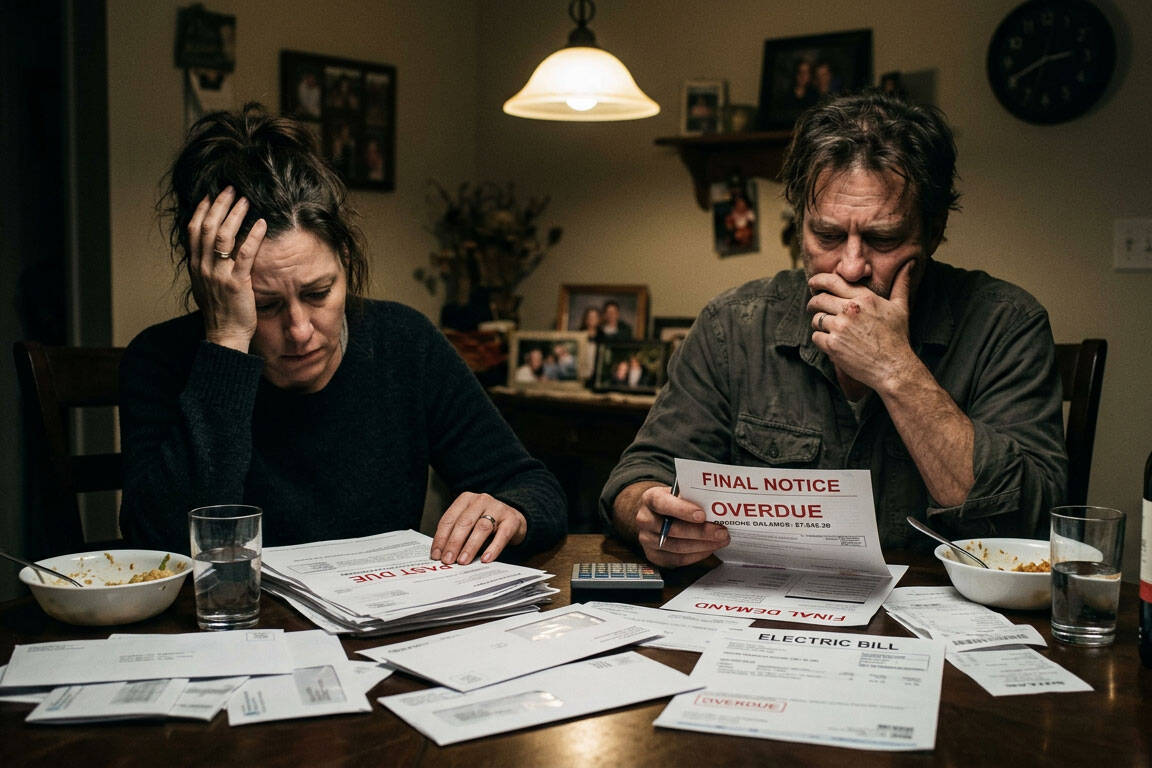
This isn’t just frustrating—it’s expensive. Every month a project sits in regulatory limbo, costs accumulate. Lawyers bill hours, consultants produce reports, and construction crews wait idle. Eventually, those costs get passed down to consumers. Your electricity bill, your rent, even the price of goods that need to be transported across new infrastructure—all inflated by a permitting system that moves at a glacial pace.
The chart below illustrates just how much longer permitting takes in the United States as compared to other Western nations.

As you can see from this chart, America has the worst of both worlds, with longer permitting processes, delivering worse environmental outcomes than countries in Europe.
President Joe Biden’s administration’s White House Council of Economic Advisers research released a report which states each additional month spent in the permitting process increases the cost of building by about $4,400 (or about 1 percent) in Washington state.
The average permit delay in Washington state is 6.5 months, resulting in a total holding cost of $31,375. These holding costs include interest payments, property taxes, insurance, and other expenses that accumulate while waiting for approval.
In New York City, a two-year delay for mid-rise development increases the per-unit cost by an estimated $50,000.
It is not just about increased costs. The shortage of affordable housing across American cities isn’t primarily because developers don’t want to build—it’s because building is incredibly difficult and time-consuming.
Energy costs tell a similar story. America has abundant natural resources and renewable energy potential, but connecting generation to consumers requires transmission infrastructure that’s sometimes impossible to build under current rules. The result? Higher electricity bills and continued reliance on older, less efficient power sources. Permitting reform could help bring cleaner, cheaper energy to your home faster.
Clean Power reports that for an energy project, the average review timeline today is 4.5 years and for transmission projects, the average is 6.5 years, and often can take over 10 years.
A new report from Grid Strategies LLC and WIRES, The Cost of Delayed Transmission, has put a hard number on what America’s slow pace of energy transmission development is costing consumers.
For every $1 billion in well-planned transmission investment that gets delayed, the study finds that consumers lose $150 million to $370 million annually in net benefits that are permanently unrecoverable. Those benefits include lower fuel and congestion costs, deferred generation investments, and greater system reliability.
Beyond lost dollars, the findings reveal systemic risks: each billion dollars in deferred investment also slows economic growth, and undermines national competitiveness.
The issue with permitting is not about eliminating environmental protections or safety standards. It’s about eliminating redundancy, consolidating overlapping reviews, and setting reasonable timelines.
There’s also an economic opportunity cost to consider. Every project delayed is jobs not created, innovation not realized, and economic growth not achieved. When a manufacturing facility can’t expand because permit approval takes years, that’s American workers who don’t get hired. When a small business can’t get approval to renovate their storefront, that’s neighborhood revitalization that doesn’t happen.
The path forward requires balancing legitimate concerns about environmental impact and community input with the pressing need to build. This means consolidating reviews, setting firm deadlines for decisions, and creating a single lead agency for complex projects. It means leveraging technology to make processes more transparent and efficient. And it means recognizing that excessive delays impose real costs on real families.
For everyday Americans, permitting reform might seem abstract compared to more immediate concerns. But the connection is direct: streamlined permitting means lower housing costs, cheaper energy, better infrastructure, and more economic opportunity. It means the raises workers earn aren’t immediately swallowed by rent increases. It means communities can actually build the solar farms, transit systems, and affordable housing they vote for.
Rep. Jared Golden understands the importance in permitting reform with his statement on his above mentioned bill: “America’s broken permitting system is delaying investments in the basics we need — energy, transportation and housing. These delays keep costs high and hold back America’s economy.”
Golden also understands the answer lies in bipartisan cooperation “Both parties have agreed on this problem for years, and today’s support from the Committee gives me hope that Congress is finally ready to take the win. I’m grateful to Chairman Westerman for his commitment to earning bipartisan support for our bill, and I’m ready to get this passed on the House floor.”






You must be logged in to post a comment.