Here is how a bipartisan effort to cut permitting red tape and modernize American bureaucracy could help fix our infrastructure backlog.
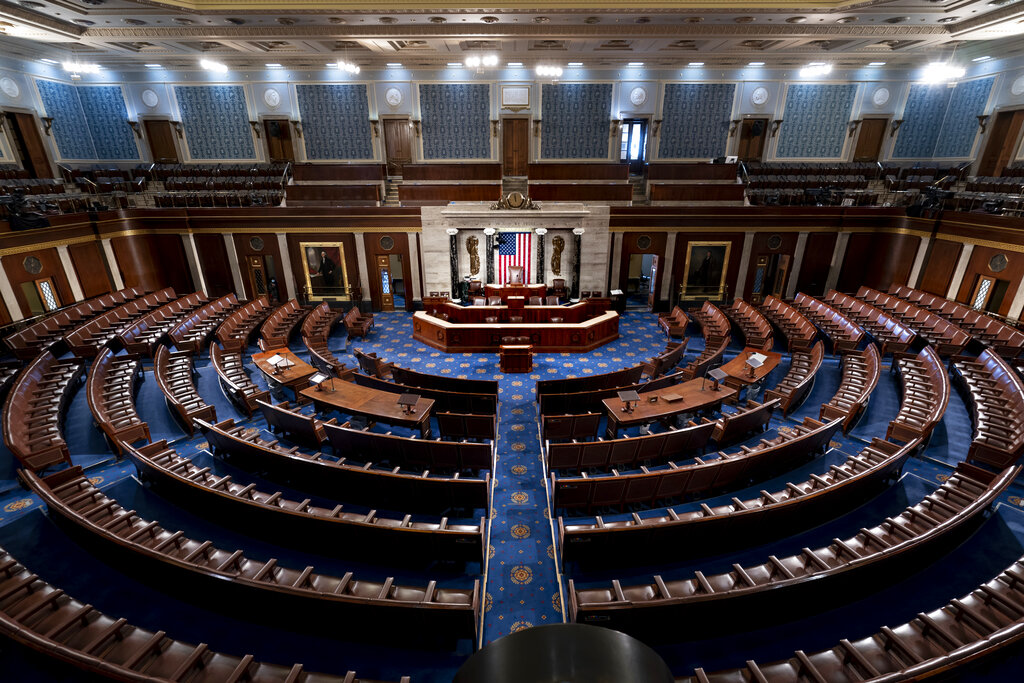
On December 9, 2025, the U.S. House of Representatives unanimously passed the ePermit Act. The ePermit Act was introduced and sponsored by U.S. Representatives Dusty Johnson (R-S.D.) and Scott Peters (D-CA).
The legislation codifies President Donald Trump’s Action Plan to modernize permitting technology across federal agencies, with the aim of reducing processing times for National Environmental Policy Act (NEPA) reviews and accelerating project approvals nationwide.
Rep. Dusty Johnson took to the floor of the House and shared these remarks about the bill: “I’ll admit to being pretty excited that the ePermit Act is on the floor today. Now, not just because it’s my bill, but because America needs this. For years, both parties have agreed that our permitting system is too slow, it’s too complicated, and frankly, it’s too stuck in the past. That’s too bad because really the story of America has been in no small part a history of big ideas and big projects. It’s time for us to get back to that. For more housing, for more broadband, for more critical infrastructure that’s going to power this American economy for decades to come.”
The United States has been choking on its own bureaucracy when it comes to permitting. What should take months now takes years, sometimes decades, as overlapping regulations, environmental reviews, and litigation.
Consider the Vineyard Wind offshore wind project in Massachusetts. Despite bipartisan support for renewable energy, it took over four years just to secure federal approval. The project faced repeated delays as multiple agencies conducted overlapping reviews, each operating on its own timeline with minimal coordination.
The Massachusetts Department of Public Utilities approved the project in 2019 and the Vineyard Wind received its final federal approval, known as the Record of Decision (ROD), from the U.S. Department of the Interior on May 11, 2021.
The $3 billion project was expected to start full operation by the end of 2025 but faces further delays. The Cape Cod Times published an article on the wind project in July of this year with the title “Blown off course: New Mass. offshore wind contracts delayed – again.”
Or look at transmission lines, the unglamorous arteries that could carry clean energy across state lines. The Plains & Eastern Clean Line, which would have transported wind power from Oklahoma to Tennessee, spent seven years and $100 million pursuing permits before finally collapsing in 2019. The culprit wasn’t safety concerns or environmental damage—it was an impossible maze of federal, state, and local approvals that no single entity could navigate successfully.
The U.S. 70 Havelock Bypass in North Carolina provides a clear example of extensive permitting delays affecting an infrastructure project. The project was initially approved in 1998.
The U.S. Department of Transportation intervened five years later and sought another review that took eight years. Construction didn’t begin until 2019 and the bypass will finally open in just a few days, on December 19, 2025.
This project faced approximately 21 years from initial approval to construction start due to permitting and review processes. The project was meant to create a 10-mile, four-lane divided highway bypassing Havelock to improve traffic flow along a major freight corridor connecting the Morehead City Port to Raleigh.
Beyond the initial federal permitting delays, the project faced further obstacles during construction including working with three railroad companies to obtain permits and access, navigating approvals to pass through the Croatan National Forest. The final cost escalated from an estimated $167 million to $259 million.
The consequences extend beyond delayed infrastructure. Affordable housing developments face years of zoning challenges and environmental reviews in cities desperately short of units. Critical mineral mines necessary for electric vehicle batteries languish in permitting purgatory with the average new mine in America taking 7 to 10 years to permit, compared to 2 to 3 years in Canada and Australia.
Rep. Dusty Johnson is leading the way on this important issue facing America with his legislation and shared “Because of this bill, we will modernize and digitize our permitting process with uniform data standards and a unified permitting portal so that agencies can work together and so that the public and communities can see what is actually happening.”
Related

Lynn Schmidt
Lynn Schmidt holds a bachelor of science in nursing from the University of North Carolina at Greensboro and a masters of science majoring in political science from the University of Nebraska-Omaha. She is a freelance columnist and editorial board member with the St. Louis Post-Dispatch and a monthly contributor to The Fulcrum. Lynn lives in St. Charles, Missouri with her husband and two daughters.