

AN ORAL HISTORY OF A DEBT CRISISTHAT HITS THE U.S. IN 2028
Nightmare on Main Street
AN ORAL HISTORY OF A DEBT CRISISTHAT HITS THE U.S. IN 2029
Nightmare on Main Street
Get your copy now!
Get it now.
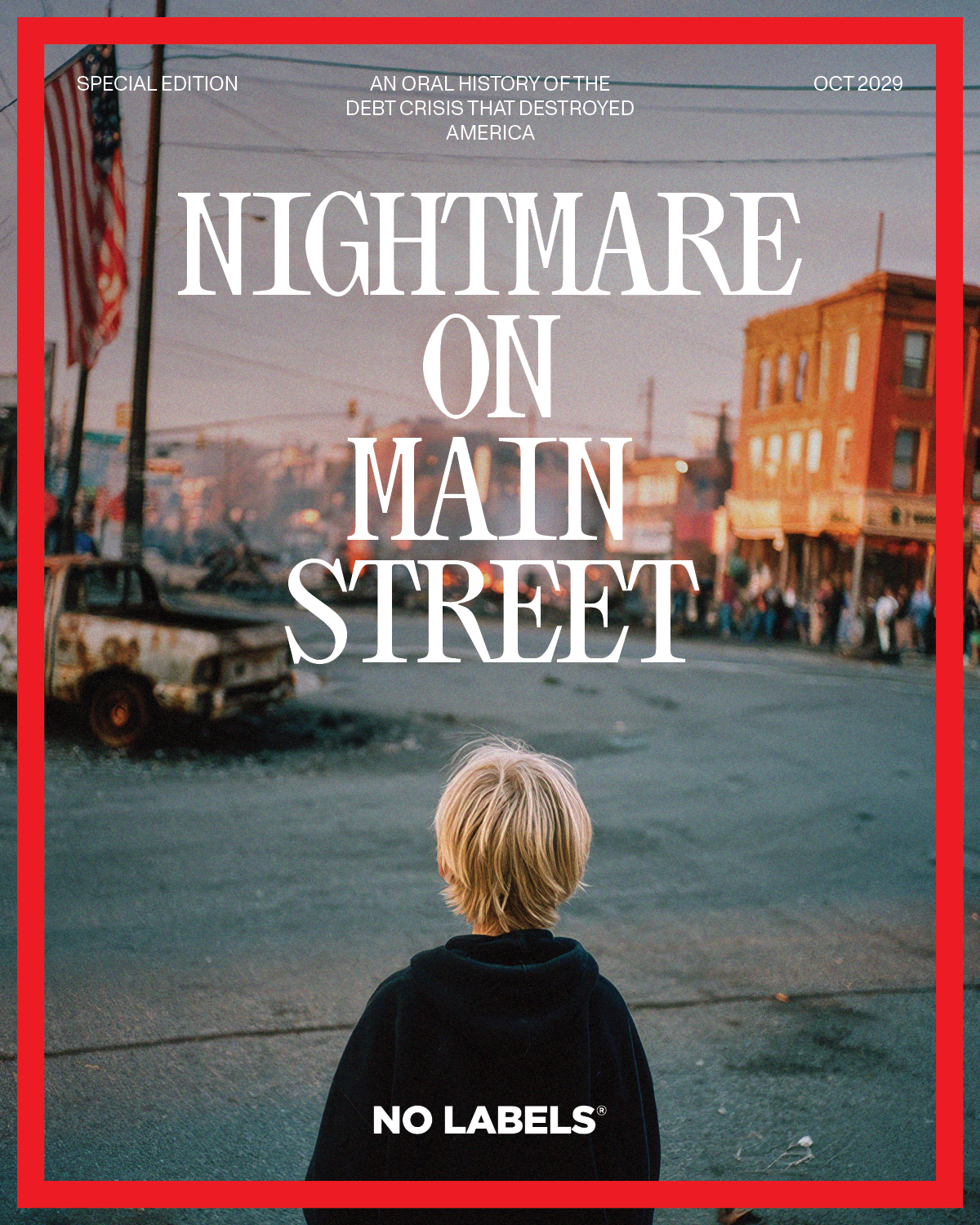
Nightmare on Main Street
America is headed toward a debt crisis, and there is zero evidence that Washington has the will to avoid it. Read No Labels' new booklet, Nightmare on Main Street, to see how such a crisis could arrive, what it would mean for you, and why the planning needs to begin now to address it.
Nightmare on
Main Street
America is headed toward a debt crisis, and there is zero evidence that Washington has the will to avoid it. Read No Labels' new booklet, Nightmare on Main Street, to see how such a crisis could arrive, what it would mean for you, and why the planning needs to begin now to address it.
America’s growing national debt is a five-alarm fire signaling our nation is becoming ungovernable.
Think about the repeated government shutdowns and budget standoffs that are now so common in Washington, and ask yourself:
Do you see any evidence that our leaders are prepared to make the hard decisions required to avert a future debt crisis?
We certainly do not, and that is why No Labels began work late last year on Nightmare on Main Street, which describes an all-encompassing debt crisis that hits the U.S. in 2028 and triggers a social and political breakdown touching every facet of American life.
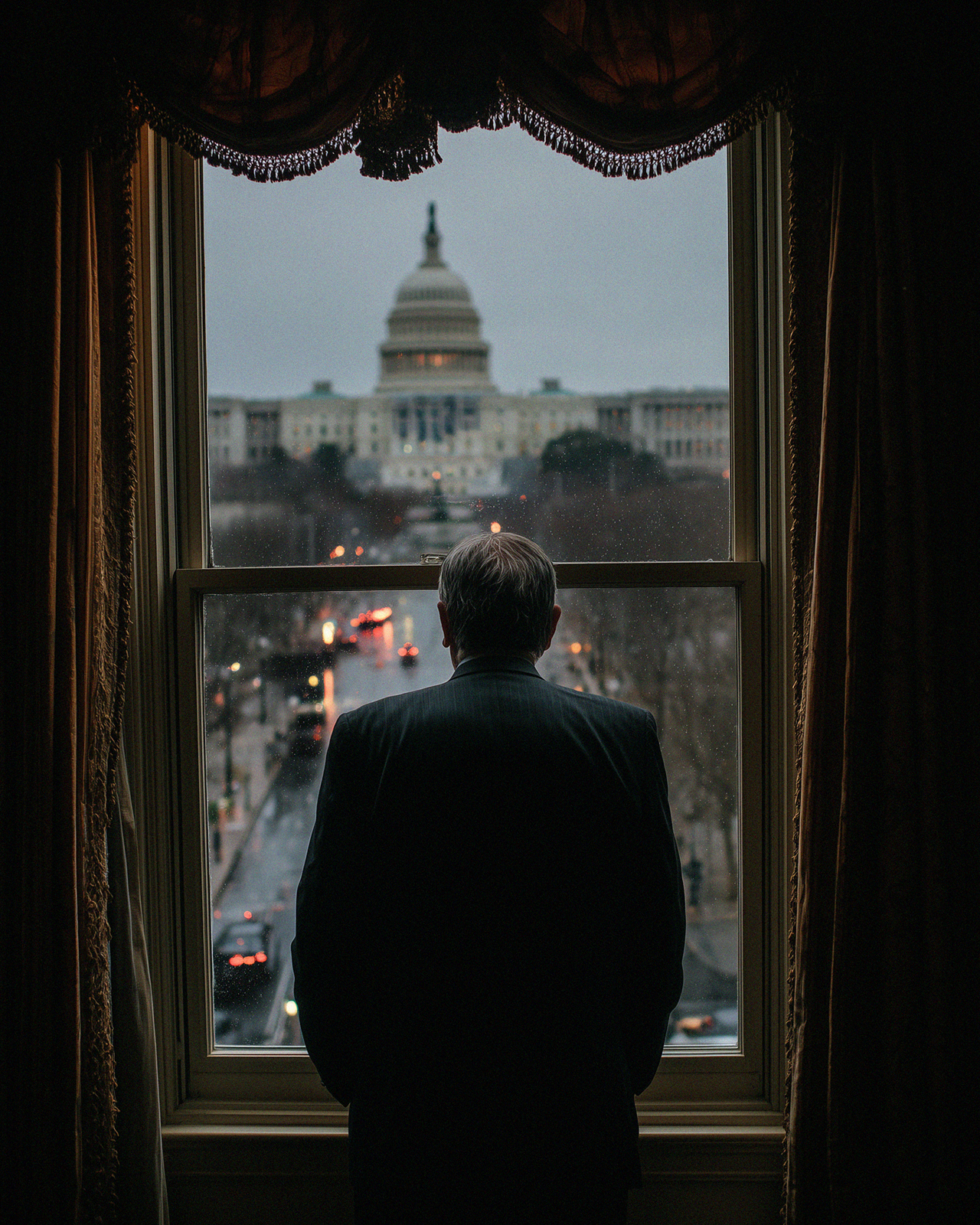
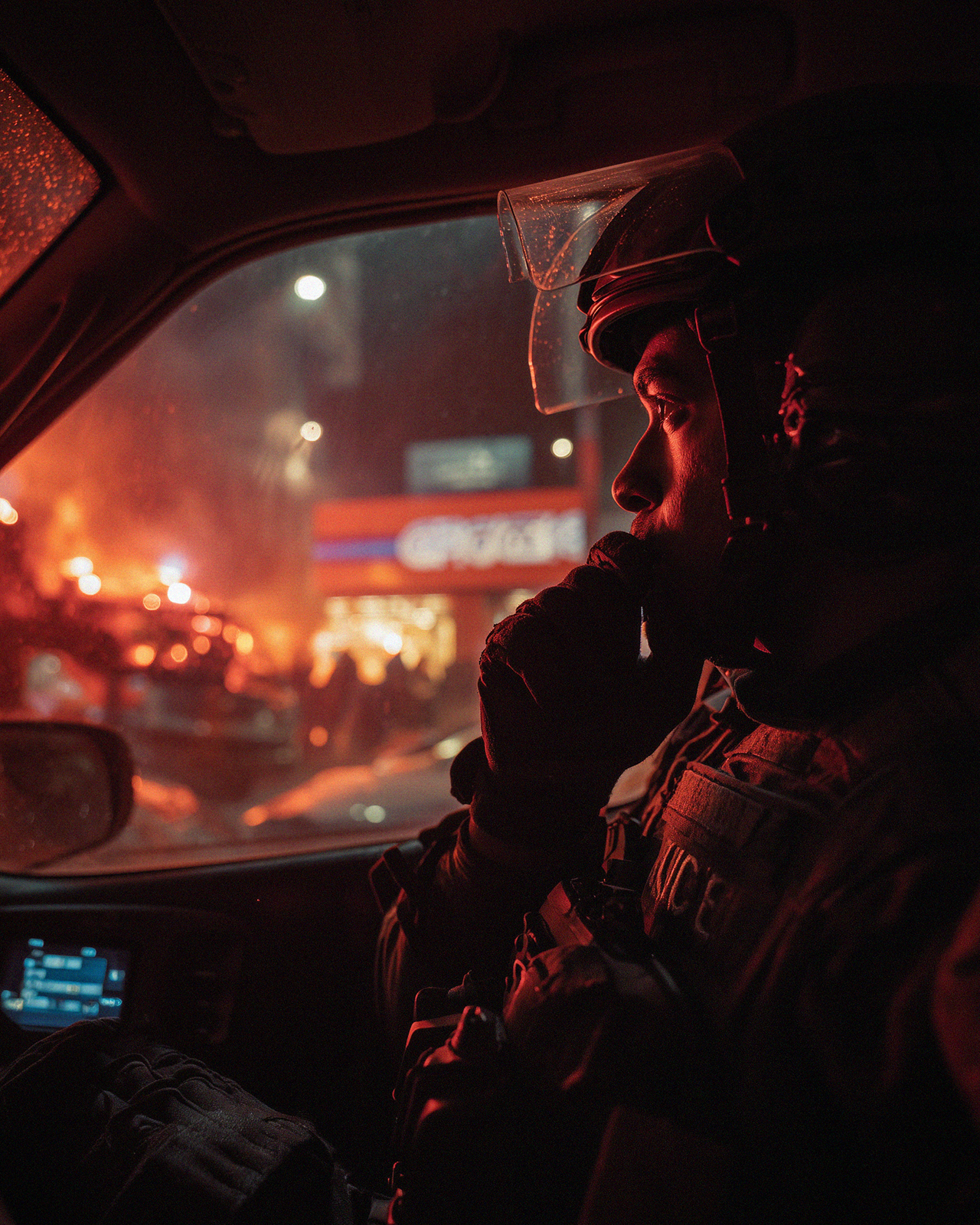
Although this is a fictional account, it is unfortunately not far-fetched. No Labels spent months speaking with former Treasury and Federal Reserve officials, economists, and investors, and researching previous financial crises. The crisis described in Nightmare on Main Street could realistically happen if America continues its current path. This is the first in a series of policy documents that No Labels will release about America's most pressing challenges.
The purpose of Nightmare on Main Street is to help wake up the public and a leadership class that acts as if our country can indefinitely run astronomical deficits without consequence. To that end, No Labels has also been hosting private, off-the-record meetings with our congressional allies to build agreement on the seriousness of this problem and the trust required to head off or respond to a debt crisis.
Nightmare on Main Street
An Oral History of the Debt Crisis That Destroyed America
Special Edition | October 2029
This is a work of fiction. Except for certain historical figures, whose public actions and identities are referenced for narrative context, all names, images, characters, businesses, places, events, and incidents in Nightmare on Main Street are fictional. Any resemblance to actual persons, living or dead (beyond the specifically identified historical figures), or to actual events is purely coincidental.
The Nightmare Arrives
The kindling for catastrophe was piled high. It only needed a match.
The 2020s began with a pandemic that shut us in and shattered our shared reality. America became a country of strangers, largely speaking the same language but inhabiting different worlds. It was often noted at the time that Americans had come to embrace strange and conspiratorial beliefs. In retrospect, our elected officials had embraced the most fantastical belief of all:
That the United States government could indefinitely run astronomical deficits and pile up debt without consequence.
By the middle of this decade, anyone paying attention knew this was a dangerous fairy tale.
Government debt as a share of the U.S. economy approached levels unseen since World War II. Investors began demanding higher interest rates on U.S. Treasury bonds and started buying more gold and precious metals. Foreign countries were holding a smaller share of their currency reserves in dollars. Each development could be explained away on its own. Together, they sent a clear message that America would pay dearly if it stayed on the same path.
We did it anyway. Each year, we piled more logs on the pyre – our deteriorating public finances just one ingredient in an increasingly volatile mix.
The government shutdowns and near-debt-ceiling defaults.
The assassination attempts and executions of political and business leaders.
The protests, escalating to violent confrontations between citizens and their government.
The collapse of trust in our institutions.
Each was a sign that America could no longer govern itself and that more Americans were unwilling to continue living peacefully alongside one another.
America outran its problems for longer than many anticipated, thanks to the AI investment boom. But the kindling was piling up the whole time, and the match was finally lit in September 2028 by the weak Treasury bond auctions, which revealed that domestic and foreign investors had finally lost confidence in the creditworthiness of the United States.
So began a societal crisis worse than most living Americans have ever endured. There have always been Americans without work, without enough food to eat, without clothes to wear, or without a roof over their heads. What’s different now is that 1 in 4 American adults is in some form of severe financial distress, along with the millions of children in their care. Everyone knows someone who has lost everything, and those still hanging on are living in fear that they could be next.
Last September’s weak Treasury auctions were not destined to be a calamity. Perhaps the fire could have been contained if Congress and the president had the courage to level with Americans about why we found ourselves in a debt crisis and what was required to get out of it. But courage was not in the cards two months out from the 2028 presidential election. Both sides of America’s political divide responded exactly how you would expect, given the events of the last decade.
To close the budget gap and restore market confidence, Democrats demanded massive tax increases, only on the rich; Republicans demanded enormous spending cuts, only to Democratic priorities. They dug in, performed, postured, and fundraised off the chaos.
As in previous economic crises, the Federal Reserve swooped in with emergency measures to calm markets and buy time. Weeks of inaction in Congress turned into months, until it finally dawned on the world that the grownups had really left the building. This was a different kind of problem, one that required more than just Congress throwing money at it. It became clear no one was coming to the rescue.
That is when the carnage really started. That is why we are all here in October 2029 – 100 years after the start of the Great Depression – in the midst of another one.
A crisis that began in Treasury debt markets has now spread throughout financial markets, to Main Street, to every facet of American society, and around the world.
You can sense it walking down almost any street in America. The abandoned storefronts and lines in front of food banks. The sticker shock every time you buy anything. People speak of the pervasive feeling that someone is lurking around the corner to take something from you, or that you could be the next victim of the epidemic of home invasions. No one can quite believe it has gotten this bad. In the last few months, Congress has finally passed a few half measures, though nothing close to what market watchers say is required to restore confidence that the U.S. is on a more sustainable fiscal path.
The American-led world order, already teetering throughout much of the 2020s, is now collapsing in on itself. Although our adversaries have hardly escaped from this crisis unscathed, they see opportunity in a weakened and divided America, where the most radical and intransigent forces in the Democratic and Republican parties are ascendant. If recent reports are to be believed, China could be on the cusp of asserting control over Taiwan.
A Nightmare on Main Street has indeed come to America. To understand what happened and what it means, we talked to the people who were there as the crisis unfolded, and the many Americans, from every walk of life, who are navigating the fallout and trying to figure out where we go from here. What follows is a comprehensive oral history of an unfolding American tragedy.
Since our founding, Americans have always believed we are the authors of our own destiny. As Abraham Lincoln said, “If destruction be our lot, we must ourselves be its author and finisher. As a nation of freemen, we must live through all time, or die by suicide."
Americans are unquestionably the authors of this Nightmare on Main Street. We brought this upon ourselves. One year into this calamitous crisis, it remains to be seen whether we can summon the strength and unity to find our way out.
Voices of Main Street: Part 1
Lydia and Jose Garcia, Phoenix, Arizona
Before all of this, we used to bring in about $92,000 a year combined. My husband worked in an Amazon warehouse and had good benefits for the kids and us. But that’s in the past now. They laid off 30% of the people at his warehouse five months ago, and he was one of them. He has applied to nearly 100 jobs since then. Nothing, and soon his unemployment benefits will run out. I am still working as a receptionist at a salon, but my hours got cut from 35 a week to 24. If Jose doesn’t get a job soon, we will barely make $30,000 next year. That just can’t work.
Our rent is still $1,800 a month. We are two months behind, and I don’t know if we’ll be able to make this month either. Our landlord has been patient, but for how long? The $900 we used to spend on groceries would be $1,100, but we only spend $400 now because that is all we have. Gas and electric hit almost $600, so we keep the AC at 82 even though it is Phoenix in the summer, and the kids wake up sweating. We defaulted on the car payment. They repossessed it last week. My husband has taken the bus two hours each way to job interviews that go nowhere.
My mom lived through the 1970s. She says this is so much worse. Back then, if you lost a job, you could eventually find another. But now hundreds of people are applying for one cashier position. The unemployment office has lines around the block. Some people camp out overnight just to get in.
We had $8,000 in savings. It lasted six weeks. We maxed out both credit cards just to buy food and keep the lights on.
The kids are stronger than I ever thought they could be. They try not to complain, but I see it in their faces. We have not bought new clothes in eight months. Everything is from the church donation bin. We eat once a day now; the kids eat twice – Mac n' Cheese, PB&J, rice and beans. I water down the milk to make it last longer. My son is 13, growing, and I cannot feed him enough. That breaks something in me every single day.
I thought about getting a second job, but there are no second jobs. There are barely any first jobs. My neighbor, who has a master's degree, is cleaning houses under the table for $75 a day.
Last week, my daughter asked why we do not have food like we used to. I told her things are tight right now. She is seven. She should not have to know what "tight" means. She should not have to understand why mommy cries in the bathroom.
If we lose the apartment, I have no idea where we will go. My sister has three kids in a two-bedroom and cannot take us in. The shelters are full. I see families living in their cars in the Walmart parking lot.
This is not what we worked for. We did everything right, saved when we could, and we never asked for handouts. Now we are lining up at food pantries that are running out of food. Now we are the charity case.
I lie awake every night running the numbers. There is no version where the numbers work next year. We are drowning, and there is no one coming to pull us out.
David and Linda Williams, Retirees, Lake James, North Carolina
I retired in 2024 at 72. I worked longer than I wanted to, just to be sure we were set. The mortgage was paid off, and our 401(k) was over $800,000. Social Security would not make us rich, but we had both worked our whole lives. We figured we had a floor we could never fall through.
Our 401(k) is worth $270,000 now, down 66% in 18 months. The "safe" target-date retirement fund – which had plenty of bonds that were supposed to protect us – collapsed right along with everything else. We had to take required minimum distributions both years, selling at the bottom, locking in catastrophic losses we will never recover from. Not at our age. Not with these numbers and not with the time we have left.
Now, we are reading that the Social Security Trust Fund will run dry even sooner than expected. All over Facebook, our friends are posting rumors that even current retirees will have their benefits cut by at least 24%. Our Congressman said that would never happen, but I don’t believe that. Retirees in Greece had their pensions cut during their debt crisis years ago. Why couldn’t it happen here?
Meanwhile, everything costs 20% more. The money we were relying on to get us through the rest of our lives, we are tapping now to get through the next month. I am 77. My wife is 75. What happens when the money runs out?
Linda has congestive heart failure. She needs three different medications to keep her heart functioning, and even with Medicare, they cost us $520 a month. We cannot afford all of them anymore, so her cardiologist told us which one we could skip and just pray her heart does not get worse without it. She is supposed to see him every three months for monitoring. We are stretching it to every six months. We just got notices that our Medicare Part B premiums will jump 22% next year, and now we hear Washington might make other changes to Medicare that force us to pay more out of pocket.
We canceled our supplemental insurance because we had to. Now we are one serious illness away from complete financial ruin. If Linda's heart gives out or if I have a stroke, the out-of-pocket costs will finish off whatever savings we have left. I think about that every day. I think about how a single 911 call could destroy us financially.
We put the house up for sale three months ago because we need to liquidate while we still can. No offers. The market is completely dead. Everyone is trying to sell, and nobody is buying. Our realtor told us to drop the price by another $40,000. Even if we sell, we’ll have to turn around and use the money to find a new place to live.
I got a job at a hardware store making $14 an hour, 25 hours a week. I am 77 years old, lifting boxes and standing on concrete for five-hour shifts. My back hurts so much that I can barely get out of bed some mornings. Linda began talking about returning to work. She was a teacher for 40 years, but she has a bad heart and gets winded just walking to the mailbox. We actually sat down and talked about whether she could handle being a greeter at Walmart, just standing there saying hello to people for a few hours, but even that might be too much for her heart.
Our daughter lost her job. Our son is three months behind on his mortgage. They cannot help us, and we cannot help them. We thought maybe we could all move in together and pool resources, but they are about to lose their house anyway. Where would we all go? The shelters do not take elderly couples. Medicaid has a five-year look-back, so we cannot even qualify because we "had assets" recently. There is no safety net for people like us.
I worked for 50 years. Fifty years. I paid into Social Security with every paycheck. I saved, I invested in the right funds, I did everything they told us to do. I believed that if you worked hard and played by the rules, you would be okay in retirement. That was the promise.
Now I wake up every day with nothing to look forward to except running out of money before I run out of time.
Crisis Responders
Fiscal Assistant Secretary of the Treasury, Washington, D.C.
I remember the Treasury Secretary – my boss – calling me at 1:01 PM on September 12, 2028, and he blurted out:
“What the hell just happened?”
He wasn’t angry. I had heard him angry before, but this was different. I could hear the fear in his voice.
I had never heard that before, and that’s when I got scared.
I’ll be honest, I don't remember exactly what I said back. I was in a daze, and I gave him some convoluted explanation for why the auction I had just run for 30-year U.S. Treasury bonds had gone so poorly.
Today, I can give you a much simpler explanation:
Investors had just collectively decided they didn’t want to buy debt from the United States of America anymore. We had become a bad credit risk – a deadbeat they didn’t trust to pay back a loan. At a minimum, they wanted to be paid a much higher interest rate to lend to America, given the increased risk.
The reason everything is still getting worse a year later is that the president and Congress still have not done enough to convince investors otherwise. They refuse to make the hard choices – or any choices, really – to reduce the deficit and restore confidence that the U.S. can get its fiscal house in order.
At Treasury, I oversaw the selling of IOUs for the U.S. government to banks, pension funds, foreign countries, and other major institutions. These IOUs are what our government runs on, because we certainly don’t collect enough taxes to pay for all the federal spending.
Each year, we ran almost 500 auctions, selling different amounts and kinds of Treasury debt ranging from 4-week bills to 30-year bonds. And we sold a ton of it. Between new debt issuance and refinancings, we sold $35 trillion in Treasury debt in 2027. The auctions were almost always smooth and uneventful; there were plenty of buyers willing to purchase the debt we were selling at an interest rate pretty close to market expectations.
Treasury actually doesn’t set the interest rate – or “yield” – on our bonds. We announce what and when we want to sell – say, $40 billion worth of 10-year bonds next Tuesday – and traders essentially make bets on the yield buyers will demand to purchase the bonds. When you put all these bets together, you get the consensus “when issued” yield. Think of it like the point spread on a football game: it’s the collective wisdom of what market participants expect to happen.
In a healthy bond auction, the final yield will be very close – typically no more than a few basis points (i.e., hundredths of a percent) – to the yield expected at the outset. And historically, there have been plenty of buyers, with at least twice as much worth of bids as there are bonds to buy.
It’s not a big deal if a single auction doesn’t go well. You get worried when several auctions in a row have low demand and close at much higher-than-expected yields.
That’s what started happening in September 2028.
We had a bad auction on September 5. In the days that followed, we had several more auctions that went poorly as well. We kept expecting the auctions to return to normal – just as they always did before – but it never happened. On September 12, we auctioned 10-year Treasuries, and the bottom just completely fell out. The final yield was 15 basis points above expected. I had never seen that in my career.
Just as bad, more than half the bonds went to “primary dealers,” the big banks that the Federal Reserve literally requires to be buyers of last resort if other bidders don’t show up. This meant the reckoning had really arrived: pension funds, money managers, foreign countries, and other typical buyers did not want to buy our debt. Or they would only buy it at a much higher interest rate than what was on offer. Primary dealers can provide a temporary safety valve, but when they are buying most of the bonds, that’s a disaster.
That’s when I got the “what the hell happened?” call from the Treasury Secretary. I knew this was bad, but I didn’t appreciate how bad it was going to get.
Chair, Senate Banking Committee, Washington, D.C.
I’ve been in this town long enough to recall when fear could still concentrate the mind and compel Congress to act.
I remember [former Treasury Secretary] Hank Paulson coming up to the Hill in September 2008 after the Lehman Brothers bankruptcy. This was the former head of Goldman walking into those rooms with the confidence of someone used to being listened to – and the face of someone who hadn’t slept in days.
He laid it out plain: credit was freezing, big institutions were failing, money market funds were wobbling, and if Congress did not move, we were looking at something ordinary Americans would call a Depression. Even Members of Congress who couldn’t agree on the color of the carpet agreed we couldn’t just let the financial system collapse.
No one wanted to bail out the banks. Most of my voters wanted the CEOs in jail. But the banks were running out of cash. If they went down, they’d take Main Street down with them. So Democrats and Republicans managed to come together to pass that $700 billion legislative turd called TARP. It was the most politically unpopular vote I ever took, but history proves we prevented something much worse. I was proud of that.
2008 was about saving the banks. 2028 was a totally different animal. The problem was the federal government's balance sheet, and no one was coming to bail it out. Although each crisis was different, both required Congress to come together fast to do something.
We rose to the occasion in 2008. By 2028, everything on the Hill was so toxic. The trust was gone. We just couldn’t do what needed to be done.
As hard as 2008 was, Washington was still ultimately giving away or loaning money. In 2028, we had to take things away. We had to cut spending, raise taxes… show bond buyers we had a serious plan to cut the deficit. A few days after that Treasury bond auction catastrophe, we got the visit from the Treasury Secretary laying out what the markets – and the moment – demanded.
The Budget, Finance, and Appropriations committees got to work immediately to draft the guts of the bill, the REVIVE Act of 2028. It had spending cuts and revenue increases. It gave the president more authority to reorganize and downsize the federal government. And it was sweetened with immigration and regulatory fixes to juice economic growth. Democrats ran the House, Republicans controlled the Senate – so it had to be bipartisan. By mid-October, the market had stabilized a bit, as investors waited to see if Congress would get its act together. Senate leaders and committee chairs did everything they could to make members understand the stakes. The whole system would blow up if we failed.
Then the bill hit the floor, and Congress did what it does best: Turn everything into social media content. The obstruction and grandstanding began immediately. People weaponized the amendment process. Members announced red lines on television, then fundraised off the chaos.
We hit rock bottom when the Senate Majority Leader begged members to vote yes on a procedural measure to fast-track the REVIVE Act so that we could vote on it before a $60 billion auction of 10-year Treasuries scheduled for the next day. That’s when the senator-who-will-not-be-named decided to filibuster. I couldn’t believe it. I was sitting in my office watching the Dow drop another 5,000 points while this guy read recipes from his grandmother’s cookbook.
I honestly don’t know how he lives with himself. But we’re all living today with the consequences of that debacle last fall. The economy and U.S. dollar are tanking, inflation is rising – our whole society is falling apart – because Congress could not do its job.
President and CEO, Federal Reserve Bank of New York, New York
I had faced a crisis like this before. Or at least that's what I thought.
I felt like the sky was falling in 2008. All of us at the trading desk did. But it was simple, really, in hindsight. All we had to do was keep the cash flowing and stop Wall Street from panicking.
We went in and bought up whatever the market wouldn’t touch – the junk mortgages, the Treasuries people were dumping for cash, everything you saw in The Big Short. If there was a seller and no buyer, we became the buyer.
We cut interest rates fast – 50 basis points here, 75 a couple of weeks later. Rates were basically at zero by the time it was all said and done. [Former Treasury Secretary Ben] Bernanke’s idea was to make borrowing cheap and hard to justify a fire sale.
This put cash back into the system, sure. But it also sent a signal: the Fed and the U.S. government weren’t going anywhere. The market would open tomorrow even if we were the only ones willing to show up.
In the short term, a few financial institutions might fail, your 401(k) might crater, but we would prevent the entire system from collapsing. We would put in a floor, so the recovery could begin.
I felt pride then. The Federal Reserve and the federal government were the doctor, nursing the economy back to health.
But in 2028, we became the patient.
Once that catastrophic auction happened on September 12, everything changed. The Fed did emergency rate cuts, just like we did in 2008. But you have to remember, the Federal Reserve only directly controls short-term interest rates. We can try to influence rates on longer-term debt, and we did by buying up longer-dated bonds and setting up repo facilities and liquidity backstops. But ultimately, the market decides what the yields will be on a 10-, 20-, or 30-year bond.
And by October, yields on 10-year Treasuries had spiked to 6.5%, two full percentage points higher than the month before. After Congress failed to pass the REVIVE Act, they approached 8%.
The old 2008 Fed playbook just wasn't working anymore.
The government still had to borrow money to pay its bills, and that left us boxed in. The only thing the Fed could do was keep injecting cash into the system. That bought us time, but Congress wasted it by doing nothing. Plus, all the money we had to dump in sowed the seeds of significantly higher inflation.
Wall Street saw the problem almost immediately. If we printed money, lenders would be paid back in cheaper dollars. If Treasury had to borrow at higher rates, every bond already out there would lose value overnight. Either way, buying and holding Treasuries stopped making sense.
That’s when the market really changed. In 2008, government bonds were a safe harbor. In 2028, they were being dumped, and there was no place to hide.
The Wreckage Spreads. A Winner Emerges.
U.S. Regional Bank CEO, Denver, Colorado
-$2,000,000,000.
I had never seen that many zeros before, at least not in red ink.
But there it was, flashing on my computer screen. We were two billion dollars short at the end of that Tuesday.
We’d drained every cash account, tapped the Fed discount window, sold what we could – even Treasury bonds at a steep loss – and borrowed from anyone willing to answer the phone. We were still short of what our customers were trying to withdraw.
The phones hadn’t stopped ringing for hours. Everyone was asking the same question, in slightly different words: Is my money safe? And behind every question was the same unspoken follow-up: If it isn’t, how fast can I get it out?
By lunchtime on Wednesday, customers had tried to withdraw 92% of our total deposit base.
We don’t keep everyone’s cash sitting in a big vault. We lend and invest it, that's how the business works. And we weren’t reckless gamblers – U.S. Treasuries were the biggest item on our balance sheet.
Looking back, putting that much faith in the Treasury was riskier than we ever imagined.
As Treasury auctions slumped, they had to offer higher yields on bonds. 6%, then 7%, then 8%.
The problem was that most of the bonds we owned paid less than 5%. Who wants to buy our existing 10-year Treasury offering 5% when they can buy a new one at 8%? No one, unless you dump them at steep discounts. That’s what we had to do.
Our customers did the math themselves. They remember the 2023 collapse of Silicon Valley Bank: another regional bank loaded with low-yield Treasuries that cratered once yields spiked, and depositors fled. Our clients weren’t waiting to see if we were next.
These weren’t idle savings accounts, and they held a lot more than the $250,000 per depositor protected by FDIC insurance. These were payroll accounts for school districts. Operating cash for hospitals. Pension funds with checks due at the end of the week. If they lost access to funds even briefly, teachers didn’t get paid, surgeries were postponed, and retirees missed checks.
When one nervous city finance director pulled his funds, others noticed. CFOs compared notes. Audit committees convened emergency calls. No one wanted to be the last one left explaining why they’d stayed.
So they all got out. Or tried to, at least. The FDIC shut us down before the end of the week.
Honestly? I don’t blame the clients. They made the right call. We were the ones who messed up by putting our full faith and credit in the U.S. government.
Portfolio Manager, Talus Capital, Miami, Florida
I get why people weren’t prepared. We heard warnings about the debt for decades. No one cared. Year after year, the government borrowed whatever it wanted. Investors still bought Treasury bonds. People were making money in stocks. Yes, we had crises, and regular people got screwed. But the Federal Reserve or Congress always bailed markets out.
People got lazy. They assumed the worst couldn’t happen. I thought it could, and that’s why I am a billionaire today.
For me, those first years after COVID changed everything. Government spending was so insane. Then they did tax cuts. But what really pushed me to bet on the apocalypse wasn’t the debt numbers. It was seeing how much these politicians hated one another and how they couldn’t even do the most basic stuff, like preventing government shutdowns. I thought to myself, “If these guys literally can’t keep the lights on, how would they ever bail us out of a debt crisis?”
So, in early 2026, I started buying doomsday insurance. I was buying put options on 20- and 30-year U.S. Treasury bond futures, which were bets these bonds would trade below a certain price by a specific date. If I was right, I could make 50x my investment, or more. If I was wrong, I would lose the whole bet.
I was wrong for a long time. Throughout ’26 and ’27, my put options kept expiring. I kept losing money on them, and I started losing investors in my fund. Paying the premiums on these put options was costing me two percentage points of performance every year – that is the difference between a great hedge fund and a dead one. I knew I would be right eventually, but I didn’t know if I could hang on long enough to collect my winnings. Every fund manager knows that famous quote, “The market can stay irrational longer than you can stay solvent.” I might have had to close up shop at the end of 2028.
But everything changed on September 5 when Treasury yields spiked, and prices tanked. By the end of the day, my puts had delivered 10x my initial investment. A lot of investors – and politicians – thought this was an aberration. I knew it was the big one. A month later, my Treasury puts were up 5,000%. These puts were only a few percent of my portfolio, but the payoff was so big that my investors made 500% overall in 2028.
I may be a billionaire now, but I’ll be honest, I don’t feel great about it. The whole world has gone to hell. A lot of my friends got wiped out. Sometimes, I feel like those guys who sold stocks short when the planes hit the Twin Towers on 9/11. But what am I supposed to do? I am a trader who saw a trainwreck coming, so I traded on it.
Founder, JP Construction Company, Reno, Nevada
I never thought of my business as being “in debt.” That word is a moral failure to me – I’m a Dave Ramsey Show listener. I did every one of his Baby Steps.
What we had was a line of credit, the kind every small construction company runs on.
We use it to make payroll on Friday when the check from the last job won’t clear until next Tuesday. We use it to buy drywall and 2x4s, and we pay the line down when the invoices come in.
For 20 years, it worked.
And then I got the call from the bank. They were freezing my line of credit.
I couldn’t understand why. We had never missed a payment. No late fees. No bounced checks. We knew all the tellers by name.
They said we didn’t do anything wrong; they just had to “limit their exposure.” That’s banker for “the economy is sinking, people are withdrawing their funds, and we’re tossing small businesses overboard first.”
I hung up and sat there for a minute, staring at the calendar. It was Monday. Payroll ran on Friday. That gave me four days to figure something out.
I called a few other banks and credit unions nearby. I told them we had work lined up, crews in the field, and checks coming in. But none of it mattered. Everyone was “pausing new lending.” Everyone was “waiting for clarity.”
By Thursday, suppliers started calling. They’d heard rumors and wanted to know when they’d be paid.
Friday morning, I called the crew together. We had a few W2 guys on payroll. A lot more who worked on contract as 1099s, but they may as well have been full-time since we did so much work together.
A few guys nodded, like they already knew. One asked if it was temporary. I said I didn’t know. That was the worst part, not having an answer.
I have been hanging by a string ever since. I still can’t get credit, so most everything we buy, every guy I pay, and every job I take is in cash.
My revenue is down 70% since last year, and so is my headcount. If something doesn’t change soon, I’m going to have to close my doors.
I did everything they tell you to on the Dave Ramsey Show. Paid my bills, didn’t carry debt, ran a clean business.
It still wasn’t enough.
The Debt Crisis Cassandra
Comptroller General of the United States, Washington, D.C.
Imagine you just started a new job as a human smoke detector, but the building was burning long before you got hired.
That’s how my time as Comptroller General has gone, more or less.
My job isn’t to make policy or stop Congress from spending. I head up the U.S. Government Accountability Office (GAO), which helps Congress improve the accountability and efficiency of the federal government. That includes fighting waste, fraud, abuse, and mismanagement.
We publish our findings publicly and send them to the relevant executive branch officials and Congress. What they do with this information is up to them. By the time I took over, the numbers were already showing a crisis was coming.
The problem was simple: For years, Washington’s spending far exceeded what it took in from taxes.
It didn’t start with COVID, but that’s when the problem got supercharged. Federal spending was in the $4 trillion range before the pandemic but shot up to $6.8 trillion in 2021. Okay – there was a global health crisis, we had to respond.
But spending never went back to “normal.” Quite the opposite. In 2025, Washington spent $7 trillion, higher than any year during COVID. We never dipped below the $7 trillion figure again.
And the cause of this permanently higher spending mostly wasn’t waste or fraud – although there is plenty of that – or even leftover COVID relief funding.
It was Medicare, Medicaid, Social Security, interest on the debt, and other forms of what’s called “mandatory spending.” That is the spending that essentially runs on autopilot; it goes up year after year, based on existing formulas set in law, without needing new votes from Congress. By 2025, this accounted for some three-quarters of the entire federal budget, a share we knew would keep growing given known demographic trends and rising interest and healthcare costs.
The remaining quarter of the federal budget is “discretionary” – this is the shrinking part of the budget members of Congress argue about every year and threaten to shut down the government over. Half of discretionary spending is for defense, and the other half is for literally everything else the federal government does, from education and the environment to medical research. If the American people want all this spending, that’s fine. The problem is Congress was not willing to generate the revenue to pay for it.
By the mid-2020s, the U.S. was regularly running around $2 trillion deficits every year, which the Treasury covered by issuing more debt. Foreign countries – which had always been such eager buyers of Treasuries – started selling them or diversifying into other assets and currencies. By 2025, the U.S. was spending more on interest than on national defense. It was our fastest-growing expense, for which we got nothing in return. History shows that’s often the beginning of the end for superpowers like us.
Every year, I would go to the Hill to testify, and my warnings got more strident. Didn’t matter. There was just no will to do anything.
The gross national debt hit $40 trillion in 2026, and it didn’t take much longer to reach $45 trillion. And that’s when the debt really started to feed on itself.
Our national debt is not like one big, fixed mortgage. The Treasury Department is constantly retiring old debt, and a lot of that COVID-era borrowing came due starting in 2026. In 2021, when interest rates were rock bottom, the Treasury could issue five-year bonds at about 1%. 2026 rolled around, and they needed to issue the same bond at about 4%. Do the math. In addition to financing current deficits, trillions of dollars in debt per year had to be refinanced – paid off and immediately borrowed again at much higher interest rates.
Once trillions in short-term debt had to be rolled over every year, confidence began to decline. Treasury auctions weren’t funding new programs anymore. They were refinancing yesterday’s bills, at higher rates, in massive volumes.
When demand finally softened, even briefly, there was no cushion. The weak Treasury auctions didn’t just raise borrowing costs, they called the entire system into question. It sent us into a new Great Depression.
The signs were there all along. Twenty years ago, my predecessor Dave Walker said, "You cannot spend more money than you make and increasingly mortgage the future without having some adverse consequences at some point in time.” It was so clear that a day of reckoning was coming soon.
Now, the reckoning has arrived.
Voices of Main Street: Part 2
Simone Brooks, Paterson, New Jersey
The hardest part isn't sleeping in a 2010 Toyota Sienna. It's watching Maya trace patterns in the frost on the window every morning and pretending it's an adventure.
I'm 34 years old, and I live in this van with my daughters – Maya is 8, and Ariana just turned 6. We've been here for three months now, parked in different spots around northern New Jersey, trying to stay invisible.
We wake up before sunrise, usually around 5:30 AM. The van gets cold at night, even with the sleeping bags and the blankets I got from the shelter downtown. Maya and Ariana sleep in the back seat, which I've folded flat, cushioned with foam padding, and filled with their stuffed animals. I sleep in the front passenger seat, reclined as far back as it goes.
The first thing I do is check my phone for the time and to see if I got any responses to job applications. Then I wake the girls quietly. We can't draw attention to ourselves. I've learned which neighborhoods are safe, which tolerate us, and which ones call the police if they see the same van parked overnight.
Never in my worst nightmares did I think this could happen. Just four years ago, my husband was still with us, and we lived in a cute three-bedroom ranch house which we rented on a corner lot in Cherry Hill. Nothing fancy. But it was cozy and full of love. I have an associate's degree in graphic design and worked for a small design shop near our house. My husband worked as a lineman for New Jersey Transit. We were doing pretty well.
Then two things happened that shattered our lives. My husband got his diagnosis of colon cancer. He passed seven months later. We got a small payout from the company’s group life insurance, but we didn’t have any life insurance of our own. That money kept us afloat for a few years. But it’s long gone now.
Late last year, the graphic design shop closed, and no one else in my field was hiring. Or in any field, for that matter. I maxed out every credit card to keep a roof over our head and food on the table. But earlier this year, I couldn’t make rent, and we lost the house. First, we stayed with relatives, then friends, but most of them are struggling as much as we are. We spent a few weeks in a shelter, but there were so many creeps there. I never felt safe. So for the last few months, we have been living in the van.
We start every day with carefully choreographed trips to restrooms. We brush our teeth in gas station bathrooms, in park restrooms, and sometimes at the library. I keep our toiletries in a small backpack – travel-sized everything. The girls have gotten good at washing up at the sink, using paper towels to wipe down their arms and faces. It's not a real bath, but it's something.
I do odd jobs – cleaning, moving furniture, whatever I can find on Craigslist that I can do while the girls are at school – and sometimes I have enough for a day pass at the YMCA or a night or two in a motel. Those are the days the girls get actual showers, I wash their hair properly, and we can forget, for a moment, that we are homeless.
School days mean I drive them to Jefferson Elementary by 7:45. They have free breakfast and lunch at the school, thank God. I registered them using my sister's address, two towns over.
Maya is struggling. Last week, I picked her up at school, and she had red eyes and wouldn’t tell me why. She told me that two girls in her class said her clothes give off basic, broke vibes.
Ariana is younger and, thank God, hasn’t had to deal with this. She still smiles when I pick her up. Maya has stopped smiling as much.
Some mornings, I wake up wanting to quit. I fight every day not to be hopeless.
Somehow, I have to.
Caleb Kim, Recent Graduate, Goizueta Business School, Emory University, Atlanta, Georgia
A few nights a week, I’m behind the bar pouring drinks for people who work in the jobs I thought I’d have by now. Soon, they may not have those jobs either.
I majored in finance at Emory. Honors. Internships. The whole package. It wasn’t cheap, but it was supposed to pay off.
And then this happened.
At first, it seemed temporary. Job postings dried up, start dates were pushed back, and recruiters suggested we “reconnect next quarter.”
But the markets never stabilized. My LinkedIn feed was flooded with #OpenToWork badges. Banks froze hiring. Big firms scrapped their junior analyst programs entirely. No one was hiring.
It was already hard to break in with AI eating up entry-level work. The debt crisis finished the job. Thanks, Boomers, for gobbling up all the wealth and the houses I will never be able to afford and leaving my generation holding the bag.
The only work I’ve been able to find is bartending three nights a week. But that pays almost nothing. People can hardly afford a night out. Tips are a joke.
As depressed as I get, I try to remind myself I am one of the lucky ones. I am living in my old bedroom in my parents’ house. I have a place to sleep and food to eat. Meanwhile, one of my classmates – whose parents live abroad – has been in and out of the homeless shelter for the last few months. Just over a year ago, she graduated with honors from a top-20 business school. Now she’s begging for help in the alumni Facebook group.
Sometimes it feels like we’ll never bounce back. A lot of firms just vanished. The ones left are much smaller, using AI so they don’t have to hire someone new. The bottom rung of the career ladder is gone.
Somewhere along the way, I stopped waiting for that Wall Street offer. I started focusing on picking up shifts, moving money around, and staying afloat. I still apply to jobs out of habit, but most don’t even send rejection emails anymore.
I worry less about falling behind than about getting used to this – about slowly letting go of the life I thought I could build.
The Crisis Deepens, At Home and Abroad
Chief of Police, Detroit, Michigan
The first thing people need to understand is that we are no longer dealing with crime in any traditional sense.
Earlier this year, we saw property crime spike for about three months, and then it just leveled off because there was nothing left to steal. We had a CVS on Grand River stripped completely bare in January, I mean, down to the shelving units and the drop ceiling tiles, and when we finally made it there, the crowd had moved on to a dollar store two blocks over.
The real problem now is civil disorder, and the nature of that disorder has changed completely.
We used to respond to protests maybe once or twice a month, and they were organized, permitted events with a beginning, a middle, and an end. Now we are responding to spontaneous gatherings almost daily, and they start over anything. A rumor about SNAP benefits getting cut. A video of someone getting evicted. An elected official saying the wrong thing at the wrong time. A few weeks ago, I had a protest of people angry that undocumented immigrants are taking their jobs, across the street from a protest angry about ICE crackdowns. And then a third group of agitators showed up because they just heard there would be trouble. My officers were stuck in the middle of it all.
A few weeks before that, separate crowds converged on a food distribution site in Brightmoor, and it turned into a full-scale brawl. 17 people hospitalized. One guy still hasn’t regained consciousness. There is no training to prepare my officers for what they are facing, with regular people – not hardened criminals or people strung out on drugs – acting like they have nothing left to lose.
Guess what happens when I need to surge officers to places where violence usually isn’t a problem? I have less manpower to police places where violence is always a problem. We are seeing four gang-related shootings a day. Every crew is fighting to hold what they have or take what someone else has. We had nine people killed in a single weekend in July over a six-block area on the east side.
And drug use has exploded. Fentanyl overdoses are up 300% from two years ago. We are finding bodies in abandoned houses, in cars, in alleys. People are stealing copper wire, catalytic converters, and anything they can turn into cash for their next hit. Last month, a man broke into an occupied home on Livernois in broad daylight to steal a safe that one of his contractor buddies said was there. He got shot by the homeowner. Turned out he had been a laid-off assembly-line worker with no prior record a year earlier. Now he’s dead.
We have lost the trust of every side. The people who want order think we are too soft. The people who want change believe we are protecting a government that abandoned them.
71st Governor of Ohio, Columbus, Ohio
Before this crisis hit, people simply did not appreciate how much Washington had been doing to prop up state and local budgets. They sure do now.
The federal government sends more than a trillion dollars to the states each year, and states get more than a third of their revenue from Washington. Ohio gets over $40 billion.
I have over three million people on Medicaid – Washington pays about two-thirds of the cost.
My state picks up most of the tab for education and infrastructure, but the federal government helps with that, too. The highway bill that Washington passes every few years funds roads and bridges. We get Title I funding and lunches for schools in low-income communities.
Then you have 3 million Ohioans on Medicare and Social Security, and 1.5 million getting SNAP benefits. Washington pays for all that.
I will tell you right now: If the federal spending cuts are anywhere near what the rumors say, families will be out on the streets. People will die. I know governors always cry 'sky is falling' when D.C. threatens a dime. This time it's real.
Our unemployment rate is 17%. Among people under 30, it’s 25%. They need more help – not less – and Ohio can’t fill the gap if Washington cuts to the bone.
I’m already raiding general funds to cover unemployment benefits. The Unemployment Insurance Trust Fund ran dry months ago. Housing and food assistance? Exhausted. Every mayor tells me policing budgets are up 25% or more – thanks to overtime for riots, looting, gangs settling scores, and everything else.
However bad the budget crunch is in Washington, D.C., I can assure you, Ohio feels it worse. So does California and every other state, red or blue. Bad news flows downhill. And I don’t see anyone in Washington with a vision for how to improve it.
Chief Strategist, Sentinel Intelligence, Singapore
The United States Navy Seventh Fleet has been in the South China Sea for 80 years, ever since President Harry Truman ordered it there to create a buffer between the Communist government on the mainland and the Nationalist forces that fled to Taiwan during the Chinese Civil War.
Several recent moves by the People’s Republic of China (PRC) suggest it is preparing to test this buffer with a potential naval blockade of Taiwan. We recently obtained the following private threat assessment, sent from a geospatial and security analytics firm to a multinational corporate client with operations in Taiwan.
TO: [Company Name Blacked Out]
FROM: Sentinel Intelligence
TIME-SENSITIVE ANALYSIS: HIGH PRIORITY
RE: PLA Movements Near Taiwan
In recent months, we have shared an array of satellite imagery, signals, and human intelligence indicating that the PRC is moving additional military resources into position for coercive or kinetic action in the South China Sea. Such actions have historically been a part of regular PLA (People’s Liberation Army) military exercises. However, we believe the PRC is now preparing for an imminent naval blockade of Taiwan.
We strongly advise the immediate evacuation of personnel and any critical assets in country.
This conclusion is not based on any single indicator, but on the synchronized nature of warnings received across our intelligence network.
Sources familiar with high-level PRC leadership thinking say the regime believes the United States is distracted and weakened by its ongoing debt and domestic problems, creating an opening for the PRC to assert control over Taiwan.
Commercial satellite imagery has revealed a surge in activity at PLA Navy bases along the Taiwan Strait, at Xiamen, Fuzhou, and Wenzhou. Surface action groups appear to be conducting unprecedented levels of coordination drills.
These exercises indicate quarantine operations, not amphibious assault rehearsals, most notably: Ships practicing station-keeping in concentric rings, helicopters conducting simulated boarding operations, and the activation of China's maritime militia – those ostensibly civilian vessels that serve as Beijing's gray-zone force multipliers.
According to confidential diplomatic and military sources in the region, signals intelligence paints an equally concerning picture. The volume and encryption levels of PLA communications have spiked dramatically.
We have obtained a cascade of mobilization indicators.
Reservists throughout Fujian and Zhejiang provinces received recall notices.
Port authorities in Shanghai and Ningbo have begun rerouting commercial shipping, clearing lanes that would be necessary for sustained naval operations.
The PLA Eastern and Southern Theater Commands have simultaneously raised their alert levels.
Coast Guard vessels began taking up positions that would form the inner ring of a blockade.
The strategic support force – China's space and cyber warfare units – moved to wartime communications protocols.
Reporting from in-country assets suggests leaders in Beijing favor a blockade because it avoids the costs of invasion while achieving their objectives through economic strangulation. Taiwan imports nearly 98% of its energy and significant portions of its food and critical materials. TSMC – which manufactures over 70% of the most advanced computer chips used by U.S. companies – would be cut off from the chemicals, raw materials, and fabrication equipment it imports from abroad. TSMC could go dark within 21 days without access to chemical reagents.
A sustained blockade, even a partial one, could force capitulation without a shot being fired. The PRC calculates that the United States and its regional allies face an agonizing dilemma: accept Taiwan's slow strangulation or risk war with a nuclear-armed power by breaking the blockade.
The PLA has directed all personnel to be ready within the next 45 days to conduct a training exercise that would be orders of magnitude larger than previous exercises. This exercise could progress to a full blockade.
Your window to evacuate personnel and in-country assets may close soon. Plan accordingly.
Director, School of Advanced Military Studies, Fort Leavenworth, Kansas
When the United States reduced military spending after the World Wars and the Cold War, we were reaping a “peace dividend” following decisive victories. This time is different.
With the rumored "Debt Crisis Mandate" of 25% reductions in defense funding, we will be cutting the muscle of a high-tech, professional force during a period of rising global instability.
To understand our increasingly dangerous present and future, we can look to the ghosts of our strategic past.
By the early 1930s, the U.S. Army had been essentially reduced to a police force. Romania and Portugal had larger armies than we did. The federal government had cut service members’ pay and veterans’ benefits. Training was so underfunded that, as the story goes, units practiced maneuvers with wooden trucks labeled "TANK.” When George C. Marshall became Army Chief of Staff in 1939, he found a force that was obsolete and dysfunctional because the institutional knowledge cultivated during World War I had evaporated. Junior officers from that conflict, like Dwight Eisenhower, spent two decades in the same rank, with their skills atrophying in an Army with no resources for realistic training.
We paid for that unpreparedness in blood. When America’s poorly trained and under-resourced Army ran into German Panzers in North Africa in early 1943, they suffered devastating defeats.
History is repeating itself here in 2029. The Air Force is already slashing pilot training hours, and the Navy is restricting steaming days.
When a force stops practicing, it stops being elite. We risk returning to the "Hollow Force" of the late 1970s, where equipment existed on paper, but we lacked the spare parts or trained crews to operate in high-intensity conflict.
Recruitment is already suffering, too. Today's military is an all-volunteer force that requires high technical literacy. But lower pay and benefits will drive away the "cyber-warriors" and engineers we need. So we have two choices, both of them bad: Lower our standards to hit recruiting numbers, or shrink the force to maintain quality. Neither gives us the fighting force required to defend ourselves.
Many Department of Defense and intelligence community workers have been furloughed or laid off, which means we already have less capacity to detect threats. We will soon have less capacity to respond.
In a world of 25% defense cuts, the U.S. will almost certainly have to withdraw a significant portion of its 100,000 troops from Europe. Eastern European allies like Poland and the Baltic nations will face a "security vacuum," forcing them to increase their defense budgets even further or seek accommodation with Russia.
We will likely have to reduce our presence in the South China Sea because more of our carriers and escorts will be tied up in extended maintenance cycles. As it is, Taiwan may already be gone. This "thinning of the line" will signal to Japan and South Korea that the U.S. can no longer guarantee their defense. It could set off a wave of nuclear proliferation as these nations seek independent deterrents.
Sustaining permanent bases in the Persian Gulf will become fiscally unsustainable. The U.S. will pivot to a "horizon-only" presence, relying on long-range drones and special forces rather than carrier groups or heavy divisions.
As U.S. counter-terrorism funding in Africa and the Middle East dries up, I am worried about groups like ISIS and Al-Qaeda seizing territory again. We are likely to see more failed states, leading to mass migration crises that could further destabilize Europe.
The timing of this couldn’t be worse, as America’s global web of alliances is in tatters. I am old enough to remember that dozens of other countries sent soldiers to fight and die alongside Americans in Afghanistan after 9/11. I can’t imagine that happening today after the way we spent years trashing our closest allies, and with foreign countries blaming us for the onset of this debt crisis.
It will take years for America to recover from this, and I worry we may never. These defense cuts do not just make a smaller version of the same military. We cannot do the things we used to do and need to do to keep the peace in a world that seems to get more dangerous by the day.
Director of Grid Operations, Evergy Inc., Wichita, Kansas
It’s never a good sign when you see FBI agents in your office.
They didn’t arrive with sirens or warrants. Just their badges and a few cases of computer equipment, asking to see our system logs.
By then, the lights had already flickered back on across most of Wichita. Most of our customers had power restored within less than an hour of the outage being reported. My team told me the remaining pockets would be restored by the end of the day. On paper, it looked like a routine disruption.
The agents told us it wasn’t.
They showed us that the outage hadn’t come from a broken line or a bad switch. The computer systems that control the grid had received commands that didn’t match any actions our operators had taken. Those systems triggered their own protective alarms, forcing an automatic shutdown.
Nothing was damaged or stolen. But that wasn’t a failure of the attack; it was the point. The agents said they think it was a warning shot.
Wichita may not be a big coastal city or a major financial hub, but you’d feel it if we went dark. They call us the “Air Capital of the World” because we’ve built more aircraft than any city on earth. Nearly 500 aerospace companies operate on my grid, many of which supply and service McConnell Air Force Base, right outside of town.
If China, Iran, North Korea, or whoever was behind this attack wanted to cripple America’s commercial and military aviation sector, Wichita is as good a target as any.
The agents told us we weren’t the only ones hit. The Port of New Orleans, the Tennessee Valley Authority, and Amazon’s headquarters in Seattle were all targeted as well.
They never told me who was behind it. They may not even know – these cyberattacks are so hard to trace. But they don’t think the timing was accidental. Someone, somewhere, thinks America is weak and vulnerable. They know every American is on edge, worried about their jobs, their savings, their safety. And now, we all have to worry about the prospect of the lights going out.
Trust me, if that happens – if we get blackouts that last more than a few days – you will be shocked how fast everything falls apart. Red or blue, rural or urban – every community would be like Lord of the Flies.
Radicalism and Realignment
Leader, Sovereign Defense Front, Fort Worth, Texas
The Sovereign Defense Front is a right-wing militia that rose to prominence during the late 2020s, opposing what they described as corrupt federal institutions. On May 24, 2029, federal authorities allege that the group’s leader, Terry James Fortier, orchestrated a bombing of the Federal Reserve Bank of Dallas, killing 52 employees and wounding hundreds more.
We obtained the following excerpt from Fortier’s intake psychological evaluation conducted at Federal Medical Center, Fort Worth, an administrative pretrial detention center.
Re: Intake Psychological Evaluation
Subject: Inmate No. 35283-078 Date: September 15, 2029 Evaluator: Dr. [Blacked Out Name]
The subject is calm and articulate. He does not appear delusional or detached from reality. He describes his actions as the product of reasoned judgment and prolonged observation. He is self-aware, saying, “They’ll say this was about anger, or hate, or some sickness. That makes it easier for them. If they can call it madness, they don’t have to answer for what they did.”
The subject links his actions to the American debt crisis and the subsequent economic collapse. In his view, the crisis was not a failure, but a demonstration of whose interests the system ultimately serves.
The Federal Reserve occupies a central role in the subject’s reasoning. He describes it as the primary institution that protects the interests of the wealthy and well-connected. He said, “When Congress racked up spending and debt, the Fed could’ve said no. But what did they do? Print more money. Make our money worthless. Raise rates to kill our businesses.”
The subject characterizes the attack as retaliation for what he perceives as sustained economic aggression. His feelings are deep-seated and longstanding. On several occasions, he repeated that he was “awakened” to reality after losing his home and job in the 2008 financial crisis. He said the time for peaceful debate and protest has passed.
His belief system is rigid and binary, dividing society into “defenders” and “enemies” of the Constitution. He views his actions as those of a defender. He says, “I hoped it wouldn’t come to confrontation. I really did. But this was economic warfare by the elites. Uncle Sam has declared war on other countries for less; I just followed their example.”
The subject acknowledges the suffering he inflicted in the bombing and says he feels bad about the secretaries and janitors who perished, describing them as “collateral damage” in a “just war.” However, he does not regret his actions and says he would commit the bombing again if given the chance. He said, “I can live with prison. I couldn’t live with their lies.”
National Political Committee Member, Democratic Socialists of America (DSA), Oakland, California
Financial crises “put the existence of the entire bourgeois society on its trial, each time more threateningly.”
Karl Marx said that. He knew capitalism would sow the seeds of its own destruction.
Look back on the last 30 years. The Dot-Com bubble, the Great Recession, the COVID pandemic. After each of those, just enough people kept faith in the capitalist system. They thought it could work for them.
Now they know it can’t. The movement that Bernie started, that AOC and Zohran grew, has arrived. We are the most potent force in the Democratic Party.
I have been an organizer for the DSA for 10 years. Nothing compares to these last few months. People who had never been political showed up in droves – renters, nurses, city workers, parents who had done everything right and still wound up underwater. Chapters that once struggled to fill a room were suddenly overflowing. Meetings moved from basements to auditoriums.
Before Zohran, politicians were afraid to call themselves socialists. They had to play it safe, and we had to accept watered-down visions for the society we want to build. That’s over. If you want DSA support, you’d better say it loud and proud.
Free Medicare for All. Universal rent control. End all deportations. Voting rights for all, whether or not you are a citizen. A 32-hour workweek. Collective government ownership of corporations. Free Palestine. End the U.S. War Machine.
This is what we want. This is what we are going to get.
We thought the Bernie surge was big. We reached just under 100,000 members by the end of Trump’s first term. That was nothing. We’re on track for one million dues-paying Democratic Socialists by the end of this year.
We were ready. When the opening came, we moved.
You saw what just happened with the 2029 Democratic National Committee elections. The old leadership ran out of answers. DSA members ran the table; we hold every leadership post from DNC chair to secretary.
We’re coming for the House and Senate next. The presidency won’t be far behind.
Red Pill Rally, Episode 441, Franklin, Tennessee
The following is an excerpt from the podcast Red Pill Rally, which has one of the fastest-growing audiences in America.
People ask me if I expected this. Of course I did. When a system breaks down like this, people start looking for answers that the establishment will not give them. I give you those answers.
The entire Jewish-run, globalist cabal has finally collapsed, just like I said it would. For years, people didn’t want to hear it. They said people like us were just fueling “white rage.” Guilty as charged. We should be pissed over what they did to this country. We let the feminists, the blacks, and the Jews run everything. How’s that working out?
Every day, I say the same thing on this show that I have been saying for years. The only difference is the number of people listening. Our audience has tripled in the last 18 months.
You don’t need to feel like you are on the fringe anymore. More of your neighbors are discovering the truth about what’s happened and what needs to happen.
It’s time to burn down this system that enriches the globalist elites at our expense.
And the Ben Shapiros, the establishment conservatives who told us to vote harder and trust the process? They are finished. They were never on our side. They just wanted to manage our decline while collecting their paychecks.
The Soros-funded groups that used to monitor us have lost funding. We operate more openly now than we have in years, and our rallies happen without interference. Our message reaches millions.
This is a young man's movement. The Boomers who sold us out are dying off. We are the future. America always has and always must be a White Christian nation, and we are taking it back.
Finn Reed, Murder Suspect, Chicago, Illinois
On November 14, 2028, Fortune 500 bank CEO Preston Whittaker was shot and killed on the way to an investor meeting in Chicago. The alleged killer, Finn Reed, turned himself in at the Chicago Police Department headquarters, announcing to the arresting officers, “I killed the capitalist pig.” He subsequently pleaded guilty and is awaiting sentencing by a Cook County Circuit Court judge. In the months since his arrest, Reed’s social media accounts have exceeded a million followers, and hundreds of his supporters – who call themselves “Fin-heads” – regularly protest for his release outside of Cook County Jail. The following letter from Reed was shared with the sentencing judge by Reed’s new legal team.
Your Honor, I wish I did not have to do what I did. I would rather be free than incarcerated. But I do not regret my actions. And I would do it again because whatever pain I may have caused pales in comparison to the pain caused by Whittaker and those like him. I knew nothing would change unless I acted. I knew the time had come to make the ruling classes tremble.
Last year, Whittaker made $57.6 million in salary and bonuses, while his bank foreclosed on families who lost everything. I don’t think Whittaker was any better or worse than others like him. They’re all the same to me. I read after he died that people thought he was a good dad and that he gave a lot of money to charity. You could say the same thing about those old mob bosses like John Gotti, but they were still criminals. So are all these CEOs whose entire business models are built on exploiting and immiserating working people. Just because they have managed to rig the laws to make what they do technically legal doesn’t make it right.
Look at what’s happened since I took action. Four big bank CEOs have resigned. Their stock prices are down even more than the rest of the market, and God willing, some of them will go under. In cities across America, hundreds and thousands of people are protesting outside of bank headquarters, demanding change. I woke people up. I lit the spark.
People are finally starting to realize our economic system wasn’t broken; it was working exactly as designed to concentrate wealth and power until ordinary people had nothing left. When the debt crisis started, I knew the time for incremental change had passed. I knew it would take a man of courage and conviction to shine a light on the injustice that infects every level of our society.
I receive hundreds of letters every week from people looking to me for guidance because I was willing to do what others only talked about. I am not a criminal but a catalyst. Remember when John Brown killed slaveowners? Remember when Nelson Mandela planned bombings against the apartheid regime in South Africa? They weren’t wrong. They were doing what was necessary to overturn oppressive and corrupt systems. The liberal establishment had its chance to fix this peacefully. They failed because they were never serious about real change. Now it falls to people like me who understand that transformative moments require individuals willing to sacrifice everything for the greater good.
I know you could sentence me to life in prison, but I hope you will not. I hope you will realize that you, too, can secure your place in history by giving me a lesser sentence. In so doing, you could make clear to the world that I had a reason, and even a justification, for what I did. That I may have broken the letter of the law, but that I did so in service of a cause that is much greater than myself.
No matter what the court system does to me, no one can undo what I have set in motion. Others are watching and learning. Change is coming. Whatever verdict you give to me, I know the verdict of history will conclude that I did a righteous thing.
What Now?
Professor of American History, Department Chair, Northwestern University, Evanston, Illinois
Imagine eight million Americans being killed today. That’s the scale of carnage America visited upon itself during the Civil War. But America endured. And when the killing was over, when the battlefields had become silent, we began the arduous work of pulling each other together.
We must do so again. Today’s crisis is different. We are, thank God, not yet in a shooting war with one another. But the challenges are hauntingly familiar.
As in the 1850s, America has spent the last decade in an escalating cycle of hatred and suspicion. Neighbors, friends, and families pitted against one another. Leaders fanning the flames of division. Violence ignored, then excused, then encouraged.
In our darkest hour, America was blessed with a most unlikely leader – a country lawyer and failed Senate candidate prone to bouts of anxiety and depression.
In 1862, that leader, Abraham Lincoln, stood before Congress and said:
“The dogmas of the quiet past, are inadequate to the stormy present. The occasion is piled high with difficulty, and we must rise – with the occasion. As our case is new, so we must think anew, and act anew.”
As is so often the case, the words of our greatest president can guide us through the difficult days ahead. If you ever doubt America’s capacity to recover and renew, remind yourself that we have persevered through worse. Remind yourself that this great country, for all its flaws, is worth protecting and preserving.
The more you study American history, the more you see that resolve and resilience are built into this country’s DNA. Over and over – whether Washington at the founding, Lincoln in the Civil War, or FDR in World War II – we see that resilience manifested in leaders who emerge at precisely the right moment.
Maybe it’s just luck. Maybe [former Prussian leader] Bismarck was right when he said that “there is a special Providence that protects idiots, drunkards, children, and the United States of America.”
Whatever it is, there is something about the American spirit that enables this great country to endure.
I also believe Americans are finally primed to force a positive realignment in our broken politics. The share of Americans who identify as independents is higher than ever. Our opinion of the two main parties – and the people who lead them – is lower than ever. The vast American middle – which rejects the extremism and demagoguery on display these past few years – still must get organized and get behind leaders who appeal to our better angels. Leaders who remind us of what Robert F. Kennedy, Sr. once said, which is that “we all share one precious possession, and that is the name American.”
Perhaps these leaders will emerge within the Democratic or Republican parties. Maybe there is finally an opening for a new party. Whatever happens, we cannot return to the same politics that got us into this crisis.
I know it sounds Pollyannish to say at a moment like this. But look hard in the communities around you. I bet you will find plenty of decent, creative, optimistic, and hardworking people. That’s who Americans are. It is who we have always been. It’s where we will find the leaders who can rise to the occasion.
Even though America feels lost, you can never lose confidence that we can find our way back.
We have done it before. We will do so again.