


More Americans are voting before Election Day than at this point in the last midterm. Here’s what the numbers show, and what they don’t.
More Americans are voting before Election Day than at this point in the last midterm. Here’s what the numbers show, and what they don’t.
As of Oct. 30, 2026, more than 46 million Americans have voted early in the 2026 midterm elections, by mail or in person, according to the University of Florida Election Lab. That already tops the 45.9 million who voted early in the entire 2022 midterm, setting a new midterm record.
Election Day is Tuesday, Nov. 3. Early voting is available to all voters in 47 states and Washington, D.C., and Connecticut, Michigan and New York are offering expanded options in a midterm for the first time. Here is how this year compares, what is new, and what early numbers cannot tell you.
The Numbers
- More than 46 million ballots cast. As of Oct. 30, more than 46 million early ballots were in, according to the University of Florida Election Lab’s tracker. Totals vary slightly by tracker as states report new data.
- More in person than by mail. About 24.1 million ballots have been cast in person and 21.7 million returned by mail (OnPoint Politics).
- Big states lead. Texas had more than 6.3 million early votes as of Oct. 28 (AP). Florida has about 4.5 million and North Carolina about 2.4 million (OnPoint Politics).
- Older voters dominate. Among early voters with age data, about half are 65 or older. Only 4.5% are 18 to 25, per University of Florida Election Lab data reported by Newsweek.
- Unaffiliated voters are showing up. Election researchers report unusually strong early participation among unaffiliated, Black and Hispanic voters in several states (Axios).
How it Compares to Past Midterms

- A new midterm record. About 45.9 million people voted early in the 2022 midterms. This year passed that mark on Oct. 30, with days of early voting still left (University of Florida Election Lab).
- Big gains in key states. Texas is up 50% from the same point four years ago, 6.3 million versus 4.2 million. South Carolina is up 83% and Maine 44%, and Michigan, North Carolina and Kansas are each up more than 30% (AP).
- Experts differ on what it means. University of Florida political scientist Michael McDonald says overall turnout could surpass 2022 and potentially rival 2018. MIT’s Charles Stewart is more cautious, saying voters may simply be shifting away from Election Day voting (Axios).
- Record years are hard to beat. Michigan and Georgia both set midterm turnout records in 2022 (AP). Michigan has also only recently expanded statewide early voting, which makes direct comparisons harder (Axios).
- A long-term shift. About 40% of ballots were cast before Election Day in 2016. That rose to 50% in the 2022 midterm and 60% in 2024 according to MIT survey data compiled by the Center for Election Innovation & Research (CEIR).
What’s New This Year
- Nearly universal access. 47 states and Washington, D.C., offer early in-person voting to all voters. 37 states and D.C. also allow anyone to vote by mail without an excuse (CEIR). In 2000, only 24 states offered early voting.
- Connecticut is the newcomer. It’s the state’s first midterm with permanent early in-person voting, which started in 2024. It’s also the first general election with no-excuse mail voting, after voters approved a constitutional amendment in 2024 (CEIR). Early voting there runs Oct. 19 to Nov. 1 (Ballotpedia).
- Michigan’s first midterm with early in-person voting. Voters approved it in November 2022, making this the first midterm with early in-person voting statewide. Michigan has about 409,000 more early votes than at the same point in 2022, a 32% increase (AP).
- New York’s first midterm with no-excuse mail voting. The state offered it temporarily during COVID-19 and made it permanent starting in 2024 (CEIR).
- Three holdouts. Alabama, Mississippi, and New Hampshire still don’t offer early in-person voting to all voters (National Conference of State Legislatures).
- Tighter mail deadlines in four states. Kansas, North Dakota, Ohio and Utah passed laws in 2025 ending grace periods for mail ballots. Ballots there must now arrive by Election Day (CBS News).
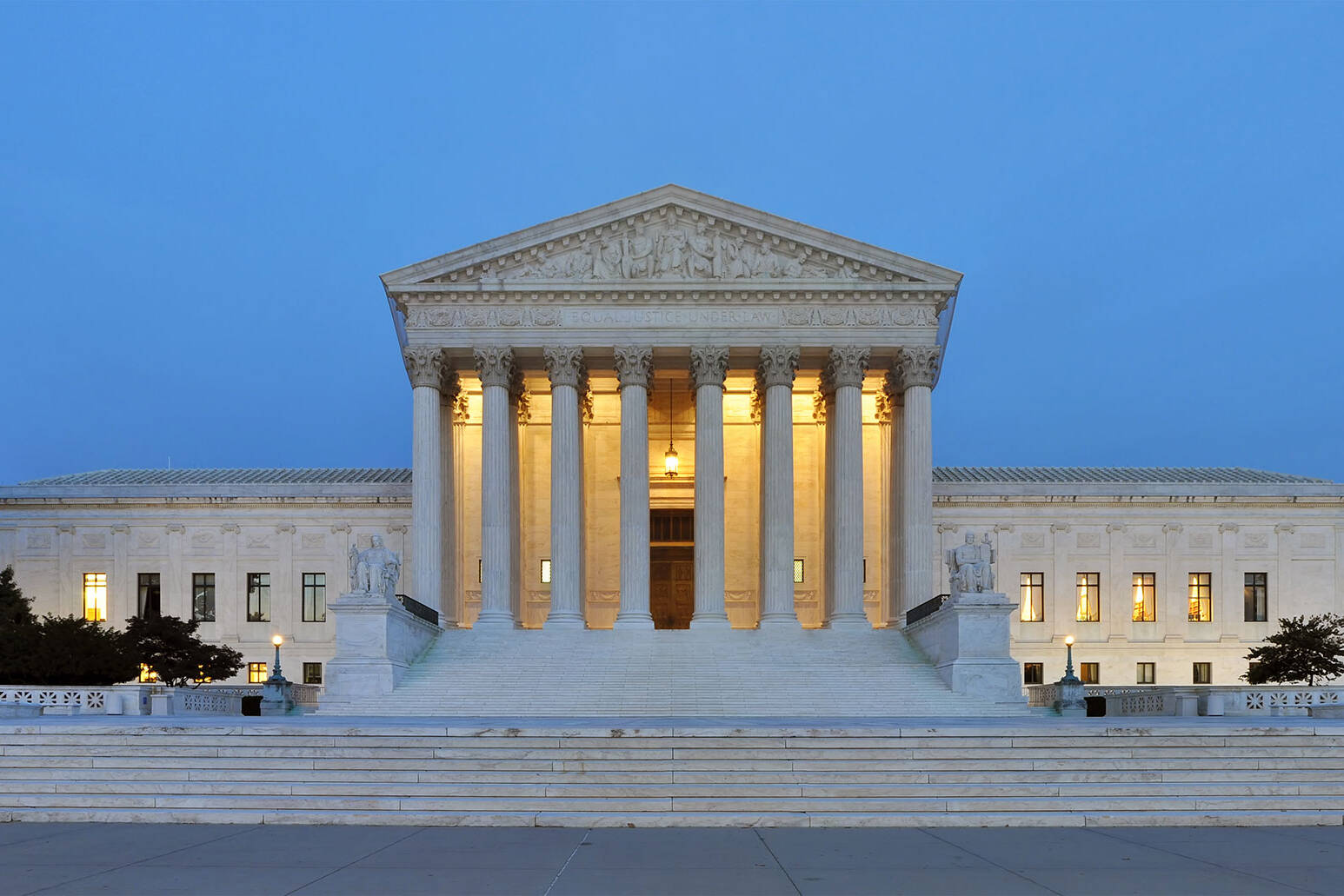
- The Supreme Court kept grace periods elsewhere. In Watson v. RNC, decided 5-4 on June 29, the Court ruled states may count mail ballots postmarked by Election Day that arrive later (Votebeat). Fourteen states and D.C. have such windows, from one day in Texas to 21 days in Washington (R Street Institute).
What Early Votes Can’t Tell You
- Turnout isn’t support. Early totals measure who is voting, not who they’re voting for (ABC7).
- Party registration isn’t a ballot. In states that report it, registered Democrats have cast 43.9% of early ballots, Republicans 31.3% and unaffiliated voters 24.8% (University of Florida Election Lab). That shows who returned a ballot, not how they marked it.
- Timing differs by party. Experts note Republicans may be shifting toward in-person voting closer to Election Day (iHeart). Democrats, meanwhile, appear to be moving from mail voting to early in-person voting (Axios).
- Records don’t decide races. Harris County, Texas, had 862,700 early votes as of Oct. 28, compared with 564,500 at the same point in 2022 (AP). It also set early-vote records in 2018, and Democrats still lost statewide (ABC13).
- States aren’t apples to apples. Different rules, voting windows and reporting practices make comparisons difficult (ABC7).
Conclusion
In just a few years, voting early has gone from the exception to the norm. Half of 2022’s midterm ballots were cast before Election Day, and this year’s early vote has already passed 2022’s total.
The early numbers show Americans are engaged. Who they chose won’t be known until the votes are counted.





You must be logged in to post a comment.