A look at U.S. immigration policy through the decades
After two fatal shootings by Immigration and Customs Enforcement (ICE) agents in Minnesota, Congress is once again debating how far the federal government should go to enforce immigration law, as well as more far-reaching immigration reform proposals
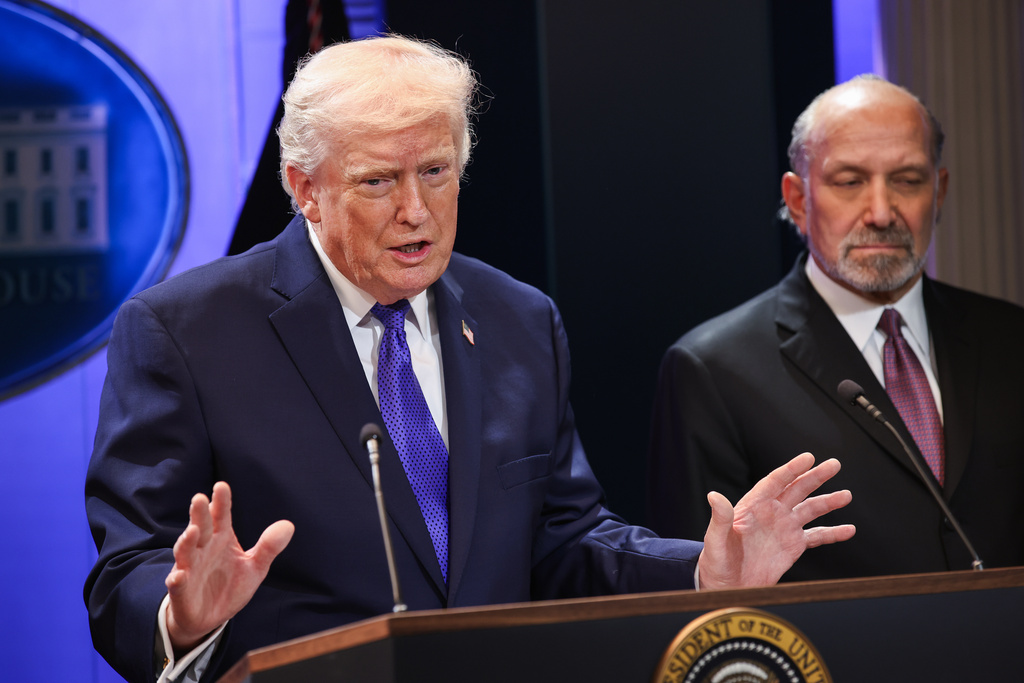
President Trump has made immigration enforcement and deportations the hallmark of his second term. The media, the voters, and Washington have all had strong reactions. But just how much of a departure is this from how previous presidents have approached immigration?
Here is how each of the most recent presidents said they felt about immigration, and what they did about it.
Donald Trump (2017-2021, 2025- present)
Words: “It’s a massive invasion at our southern border that has spread misery, crime, poverty, disease, and destruction to communities all across our land.” July 19, 2024
Actions: President Trump focused on restricting entry during his first term. He built 460 miles of barriers (“the wall”) at the southern border, banned all entry from seven majority-Muslim countries, cut refugee admissions by 85%, and required many asylum seekers to wait outside of the U.S. while their claims were being processed. President Trump’s second term has focused on deportations, with ICE arrests at record levels and illegal border crossings down 93% from 2024.
Joe Biden (2021-2025)
Words: “The only America Donald Trump believes in is an America divided. I believe in the United States of America, an America that is strengthened by its diversity, proud of our heritage as a nation of immigrants, and where families belong together.” October 30, 2020
Actions: President Biden rolled back many of President Trump’s immigration restrictions. He expanded legal pathways for refugees from Ukraine, Afghanistan, Cuba, Haiti, Nicaragua, and Venezuela. His Justice Department defended Dreamers – people who were brought to the U.S. illegally as children by their parents – in court. He hired 2,000 additional Border Patrol agents. He continued using the pandemic-era Title 42 public-health authority to rapidly expel migrants at the border. Under President Biden, America illegal border crossings reached all-time highs in 2022 and 2023, with at least 8.6 million recorded during his full term.
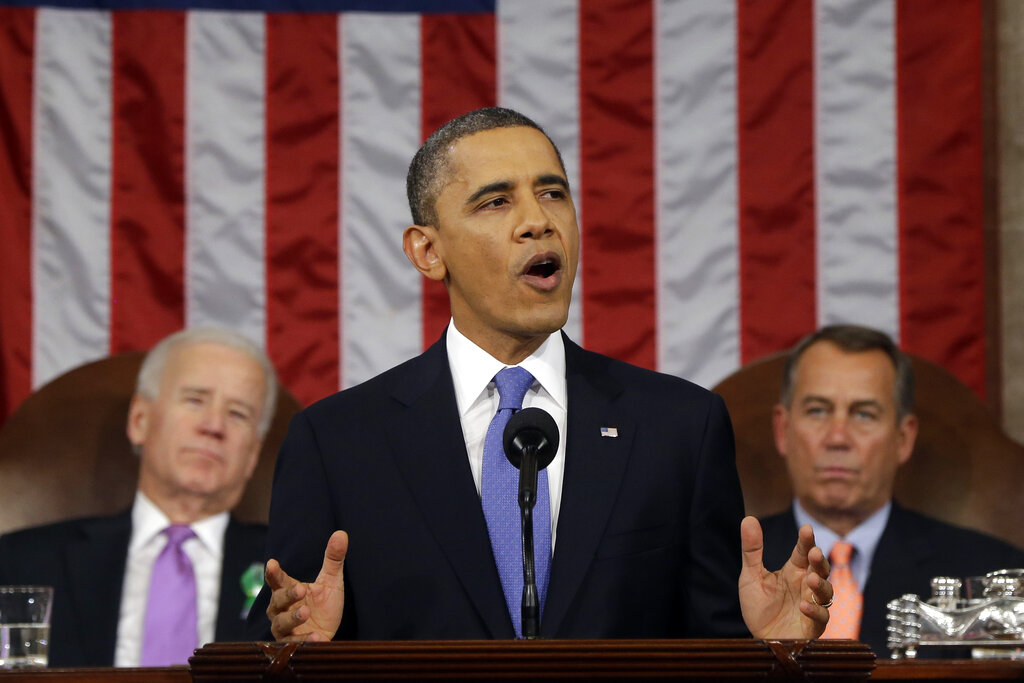
Barack Obama (2009-2017)
Words: “We have always drawn strength from being a nation of immigrants, as well as a nation of laws, and that’s going to continue.” June 15, 2012
Actions: President Obama’s immigration legacy largely centers on a major reform effort that fell short. He advocated for the bipartisan “Gang of Eight” plan that included a pathway to earned citizenship and enhanced border security. The bill passed the Senate but ultimately failed in the House. He established a program to shield Dreamers from deportation. Pro-immigration advocates called President Obama the “Deporter-in-Chief” because he removed more unauthorized immigrants (3.1 million) than any previous president.
George W. Bush (2001-2009)
Words: “Extending hope and opportunity in our country requires an immigration system worthy of America – with laws that are fair and borders that are secure. When laws and borders are routinely violated, this harms the interests of our country.” January 23, 2007
Actions: President Bush pushed for broad immigration reform that combined stronger enforcement with legal worker programs. He nearly doubled the number of Border Patrol agents and built 650 miles of border fencing. Immigration advocates criticized President Bush’s use of “workplace raids” to arrest unauthorized immigrants at factories, farms, and other job sites. After 9/11, President Bush tightened visa screening, making it harder for tourists, students, and business travelers to enter the U.S. Congress created ICE and Customs and Border Protection under President Bush, reshaping immigration enforcement around a national-security framework.
Bill Clinton (1993-2001)
Words: “We are a nation of immigrants, but we’re also a nation of laws. And it is wrong and ultimately self-defeating for a nation of immigrants to permit the kind of abuse of our immigration laws we have seen in recent years.” May 6, 1995
Actions: President Clinton signed the Illegal Immigration Reform and Immigrant Responsibility Act of 1996, which expanded grounds for deportation, created expedited removal, and increased penalties for unlawful presence. He launched “Operation Gatekeeper” to surge Border Patrol agents, fencing, and technology to the San Diego–Tijuana corridor. His administration also expanded cooperation between federal and local law enforcement on immigration and oversaw a sharp rise in deportations during the late 1990s.
George H.W. Bush (1989-1993)
Words: “Immigration is not just a link to America’s past; it’s also a bridge to America’s future.” November 29, 1990
Actions: President Bush signed the Immigration Act of 1990, which increased total visa caps, tripled employment-base green cards, and created the Diversity Visa Lottery and the Temporary Protected Status programs. The law also cracked down on illegal immigration by expanding grounds for deportation and increasing penalties for fraud and false statements.
Ronald Reagan (1981-1989)
Words: “You can go to live in France, but you cannot become a Frenchman. You can go to live in Germany or Turkey or Japan, but you cannot become a German, a Turk, or a Japanese. But anyone, from any corner of the Earth, can come to live in America and become an American.” January 19, 1989
Actions: President Reagan signed the Immigration Reform and Control Act of 1986, which granted legal status to roughly three million unauthorized immigrants, created penalties for employers who knowingly hired unauthorized workers, and expanded border enforcement. The law paired legalization with tougher enforcement and workplace verification requirements, reflecting a bipartisan effort to address both the undocumented population and future illegal immigration. It is widely considered the last major comprehensive immigration reform to pass Congress.
Jimmy Carter (1977-1981)
Words: “We will continue to provide an open heart and open arms to refugees seeking freedom” May 5, 1980
Actions: President Carter prioritized refugee protection and humanitarian admissions. He signed the Refugee Act of 1980, creating the modern permanent refugee and asylum system and tripling the annual refugee cap. He also used emergency authority to admit 485,000 refugees escaping communism in Southeast Asia and Cuba.
Gerald Ford (1974-1977)
Words: “Older nations in the 18th and 19th centuries granted their nationality to foreign born only as a special privilege, if at all. We offered citizenship to all, and we have been richly rewarded.” July 5, 1976
Actions: President Ford signed the Indochina Migration and Refugee Assistance Act of 1975 to admit and resettle hundreds of thousands of refugees from Vietnam, Cambodia, and Laos. His administration relied heavily on parole authority to admit refugees, laying groundwork for the refugee system later formalized under President Carter, while largely maintaining the post-1965 immigration framework.
Richard Nixon (1969-1974)
Words: “The problem of illegal aliens… is one which administration after administration has wrestled with without too much success.” June 22, 1972
Actions: President Nixon emphasized immigration enforcement and border control. He launched Operation Intercept in 1969, which was a near-total shutdown of the southern border aimed at stopping drug traffickers. He also pushed for employer sanctions and stronger interior enforcement against unauthorized immigration, though Congress did not enact those proposals.
Lyndon Johnson (1963-1969)
Words: “The days of unlimited immigration are past. But those who do come will come because of what they are, and not because of the land from which they sprung.” October 3, 1965
Actions: President Johnson signed the Immigration and Nationality Act of 1965, which abolished the national-origins quota system that had been in place since the last major immigration reform passed in 1924 – a system that heavily favored immigrants from western Europe and limited those from everywhere else. The law replaced it with a framework prioritizing family reunification and employment-based immigration, which still forms the foundation of the modern U.S. legal immigration system.
John F. Kennedy (1961-1963)
Words: “Little is more extraordinary than the decision to migrate, little more extraordinary than the accumulation of emotions and thoughts which finally leads a family to say farewell to a community where it has lived for centuries, to abandon old ties and familiar landmarks, and to sail across dark seas to a strange land.” From A Nation of Immigrants published in 1964
Actions: President Kennedy wrote the book on bipartisan immigration reform, quite literally. He began writing A Nation of Immigrants in 1958, arguing for a complete overhaul of U.S. immigration policy, but was assassinated before he could finish it. Decades later, the book was still drawing praise from both sides of the aisle, with figures like Sen. Marco Rubio and former Secretary of State Madeleine Albright endorsing it in 2018. While Congress did not pass Kennedy’s proposals during his lifetime, most were ultimately accomplished under President Johnson.
Related

Peyton Lofton
Peyton Lofton is Senior Policy Analyst at No Labels and has spent his career writing for the common sense majority. His work has appeared in the Washington Examiner, RealClearPolicy, and the South Florida Sun Sentinel. Peyton holds a degree in political science from Tulane University.