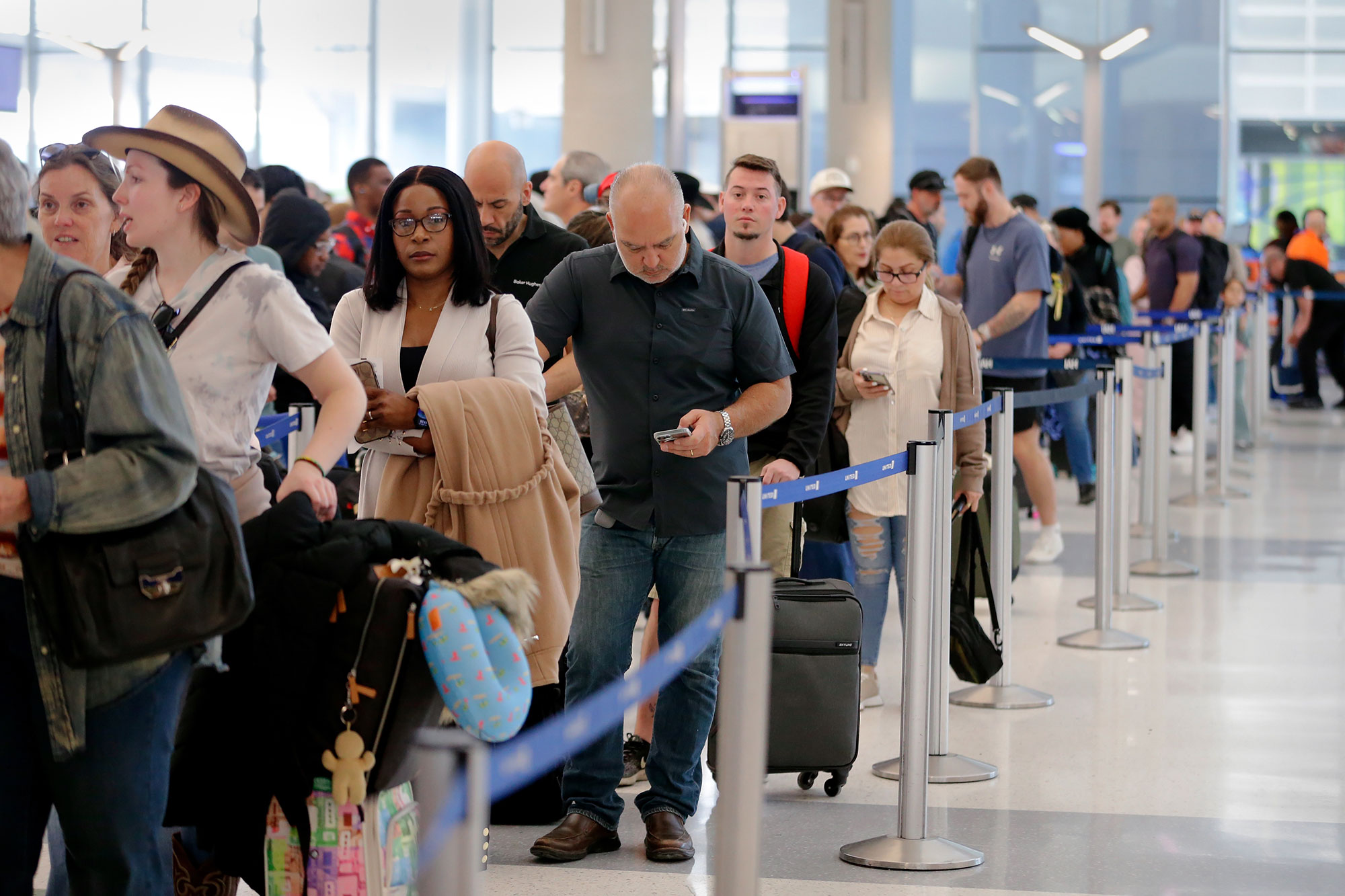
The airport lines are the part you can see. The part you can’t is more serious.
The Department of Homeland Security (DHS) has been operating without appropriations since February 14th, the longest single-agency shutdown in U.S. history.
The rest of the government is fully funded, but Senate Democrats blocked DHS funding to demand reforms to Immigration and Customs Enforcement (ICE), which falls under DHS.
You’ve probably already seen a major consequence of this shutdown: hours-long TSA lines at airports across the country. For most travelers, that’s an inconvenience. But the more serious damage is happening out of sight.
Here’s what the DHS shutdown is actually doing to America’s counterterrorism infrastructure, and why the risks will outlast the shutdown itself.
What’s Still Standing
Not everything at DHS is shut down. In fact, 90% of the Department’s 272,000 employees are considered “essential,” meaning they continue to work (though most aren’t getting paid).
ICE and Border Patrol are up and running. The President and Vice President are still receiving Secret Service protection. The core architecture of counterterrorism – intelligence collection, threat response, enforcement operations – remains functional.
What has weakened is the infrastructure of prevention. That distinction matters, because it’s where most of the real work happens, and where the costs of a six-week funding gap will be felt long after a deal is reached.
Airport Lines Are the Least of It
Aviation security shows the most visible damage. Over 50,000 TSA officers have been working without pay since mid-February. More than 400 have resigned. Thousands are calling out daily, with some airports seeing 40% of agents not showing up on a given day.
President Trump deployed ICE agents as a stopgap, but it’s unclear how helpful they can be. ICE agents aren’t trained or certified in airport security screening; their role has been limited to crowd control and guarding exits so far.
The security lines are the part people see. The part they don’t see is more serious.
The Intelligence Breakdown
The most significant gap is the one that’s hardest to observe from the outside: the breakdown in coordination between federal, state, and local authorities.
The National Fusion Center Association – the primary mechanism by which federal threat intelligence about known or suspected terrorists reaches local law enforcement – hasn’t received its 2025 funding allocation. Police departments around the country are receiving less federal support while being asked to shoulder more responsibility.
The National Terrorism Advisory System website hasn’t been updated since February 17th. A notice says it won’t be until the shutdown ends. That gap is notable given the launch of the U.S.-Iran conflict, which is sure to increase the risk of terrorism here at home.
Cyber Defense Running on Fumes
The Cybersecurity and Infrastructure Security Agency (CISA) – responsible for protecting the power grid, water systems, communications networks, and hospitals – entered the shutdown already weakened, having lost roughly a third of its workforce through earlier Trump administration reductions. The shutdown furloughed 62% of what remained.
CISA is now operating at approximately 38% capacity. It has essentially become a cyber fire department: it can respond to active incidents, but not do the proactive work to prevent those incidents from happening.
Former senior officials have warned that adversaries may see the shutdown as an opportunity to probe our defenses and cause chaos. Iranian-linked actors have a documented history of targeting U.S. infrastructure, and the U.S.-Iran conflict has escalated sharply during these six weeks.
The Preparedness Gaps Piling Up
The degradation extends further than any single agency.
National Level Exercises – large-scale drills simulating terrorist attacks and major disasters –have been suspended. These are how the interagency response system finds and fixes coordination failures before a real event demands it.
FEMA grant funding to cities, counties, and local law enforcement has frozen, including grants for specialized counterterrorism training and equipment.
The $625 million FIFA World Cup Grant Program – already appropriated by Congress – hasn’t been distributed to host cities. The World Cup represents one of the highest-profile soft-target terrorism risks in the near term, and local law enforcement in host cities is planning without those funds.
The Coast Guard has grounded aircraft, halted or reduced crew training, and cancelled patrols. It cannot hire or onboard new personnel during the shutdown, so workforce shortfalls will persist well after funding is restored.
Secret Service agents are continuing to protect the president, vice president, and major events – but active modernization programs have been paused. That timing matters: Iran has already tried to assassinate President Trump twice before, and the current conflict has escalated significantly since the shutdown began.
The costs of the shutdown are accumulating fast. Leaders in both parties have offered deals; it’s time to get to the negotiating table and finish the job.
Related

Peyton Lofton
Peyton Lofton is Senior Policy Analyst at No Labels and has spent his career writing for the common sense majority. His work has appeared in the Washington Examiner, RealClearPolicy, and the South Florida Sun Sentinel. Peyton holds a degree in political science from Tulane University.