


China, Russia, Cuba, and Iran’s role in financing, arming, and shielding Venezuela’s dictatorship
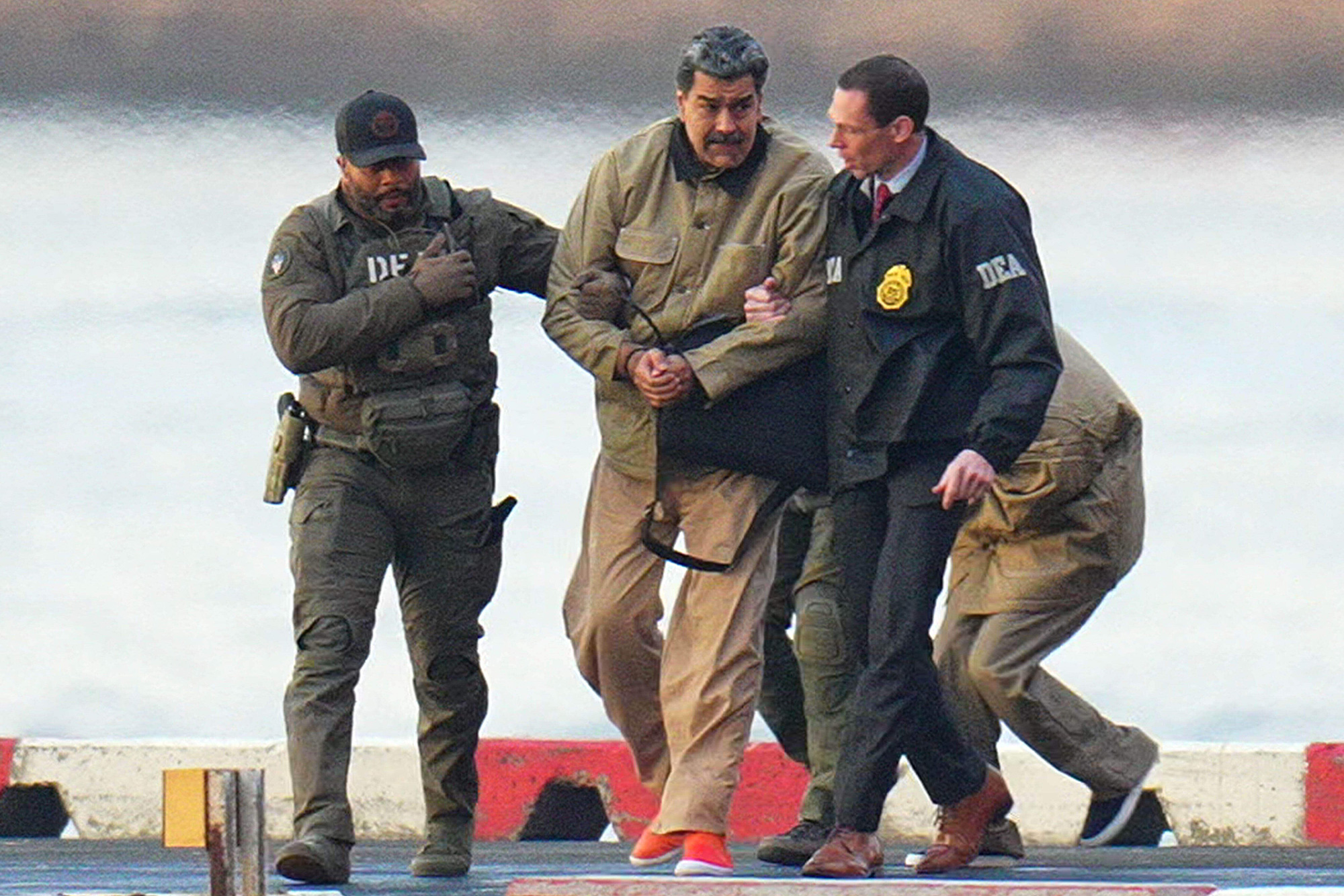
When American forces arrested Venezuelan dictator Nicolas Maduro, four countries immediately and unequivocally denounced the U.S.:
China called it “illegal and bullying.” Russia felt “deep concern and condemnation.” Cuba said it was “cowardly” and “blatant imperialist and fascist aggression.” And Iran condemned the “blatant violation of [Venezuela’s] national sovereignty.”
The list wasn’t surprising. These four countries are Venezuela’s closest allies and trade partners, united by a shared opposition to the U.S. and other liberal democracies. For years, they’ve treated Venezuela not as a failing state, but as a strategic asset – a source of oil, influence, and leverage just miles from the American mainland.
Maduro traded Venezuela’s oil and proximity to the U.S. for weapons, money, and diplomatic protection to keep his regime alive. Here’s how it worked.

China Funds Venezuela
China, the world’s second-largest economy, bankrolls Venezuela. Since 2000, Beijing has loaned Venezuela more than $106 billion. In return, Venezuela sent “all the oil that China needs for its growth and consolidation as a power” as Maduro’s predecessor Hugo Chavez once put it.
Venezuela held up its end of the bargain. By late 2025, roughly 80% of Venezuelan oil exports went to China – about 746,000 barrels per day.
Beyond oil, China is Venezuela’s second-largest overall trading partner (behind the U.S.). But the relationship is heavily tilted in China’s favor: Venezuela bought $3.5 billion worth of Chinese goods in 2023, while China purchased just $740 million in Venezuelan exports.
China has also supplied Venezuela with advanced military tech, including radar and air-defense systems that are supposed to be able to detect and shoot down stealth aircraft. But the Chinese tech failed: U.S. forces used stealth drones to track down Maduro undetected, leading to his arrest.
Perhaps most importantly, China provides diplomatic cover for Venezuela. Just hours before his capture, Maduro met with Chinese diplomats in Caracas. For years, Beijing has shielded his regime at the United Nations, blocking resolutions calling for democratic elections and recognizing Maduro as Venezuela’s legitimate leader even as most Western governments rejected him as illegitimate on account of his widely acknowledged stealing of the 2024 election that independent analysis suggests he lost by over 30 points.
Russia Arms Venezuela
If China is the bankroller, Russia is the armorer. Over the past 25 years, Moscow has loaned Caracas $17 billion and sold them $20 billion worth of weapons, making Venezuela Russia’s largest military customer in the Western Hemisphere.
Their relationship centers on oil-for-arms deals: Venezuela transferred stakes in major oil and natural gas fields to Russia in exchange for guns, tanks, and aircraft – including nuclear-capable bombers. Maduro has openly credited Russia with helping turn Venezuela into a “fortress.”
The alliance is political as well as military. Russia works in lockstep with China to protect Venezuela at the UN, and Venezuela returns the favor. In 2024, Maduro turned over two Colombian soldiers to Putin after they volunteered to fight for Ukraine.
Cuba Staffs Venezuela
Venezuela is the smaller partner in its relationships with Russia and China, but its partnership with Cuba is much more balanced.
The two regimes are closely intertwined. Havana sits just over 1,300 miles from Caracas, their economies and populations are similar in scale compared to Russia and China, and they share a language and political ties that stretch back decades.
That closeness has produced deep cooperation. Venezuela began supplying Cuba with oil at a discount in 1999 and now provides 25% of the island’s total oil use, even as Venezuelan production has slumped.
Venezuela also helped bring Cuba online. Where the island once relied on slow, unreliable satellite connections, Venezuela financed and built an undersea fiber optic cable linking Cuba to the South American mainland. The cable increased download speeds by 3,000 times and added capacity for millions of simultaneous phone calls.
In return, Cuba played a crucial role inside Venezuela. By 2015, Cuba had sent 40,000 government employees to improve literacy, health care, and sports training. Today, more than 10,000 Cubans still work in Venezuela, primarily as medical staff – though not always by choice. The U.S. State Department found that many of the doctors are subjected to forced labor, with passports confiscated, long hours imposed, and strict limits on movement and communication.
Cuba also helped keep Maduro’s regime in power. Venezuelan intelligence agents are trained by Cuban spies, and Cuban personnel are embedded throughout Venezuela’s security forces. Maduro relied on Cuban guards for his personal protection, and 32 Cubans were killed during the raid that captured him.
Iran Abets Venezuela
Iran is Venezuela’s most openly defiant ally, their “ally of last resort” as Al Jazeera puts it.
While China and Russia have at times tried to limit their exposure to U.S. sanctions – such as by routing Venezuelan oil through third-party countries instead of buying directly – Iran has often gone the other direction. In 2020, Iran sent 10 tankers full of oil to help ease Venezuela’s fuel shortage, the largest shipment Iran had ever made.
Iranian technicians help repair and operate Venezuela’s oil refineries, supplying expertise and replacement parts to keep production running. The partnership extends to the military sphere as well. Venezuela buys drones, ships, and missiles from Iran, while Iran gains a foothold in the Western Hemisphere.
That foothold has real consequences. In late 2025, operatives at the Iranian embassy in Caracas plotted to assassinate Israel’s ambassador to Mexico. The plot was stopped, but it underscored how valuable Venezuela has become as a staging ground.
Venezuela also serves as a key supporter of Hezbollah, a terrorist organization created by Iran. U.S. intelligence officials believe “Hezbollah operatives and their co-conspirators hold senior positions in the Venezuelan government,” where they launder hundreds of millions of dollars per year for the organization. They also provide weapons, passports, and other logistic support to Hezbollah operatives across North and South America.
Taken together, these relationships explain why Maduro’s fall triggered such an immediate and coordinated backlash. Venezuela had become a shared project for China, Russia, Cuba, and Iran – a place to park money, move oil, test weapons, train security forces, and run operations just miles from the U.S. coastline. Removing Maduro didn’t just upend Venezuelan politics. It disrupted years of quiet coordination and exposed how much these regimes had invested in keeping him in power.



You must be logged in to post a comment.