


Turnout came close to a modern record, and nearly every major group shifted from 2024. Here’s what the numbers show, and what they don’t.
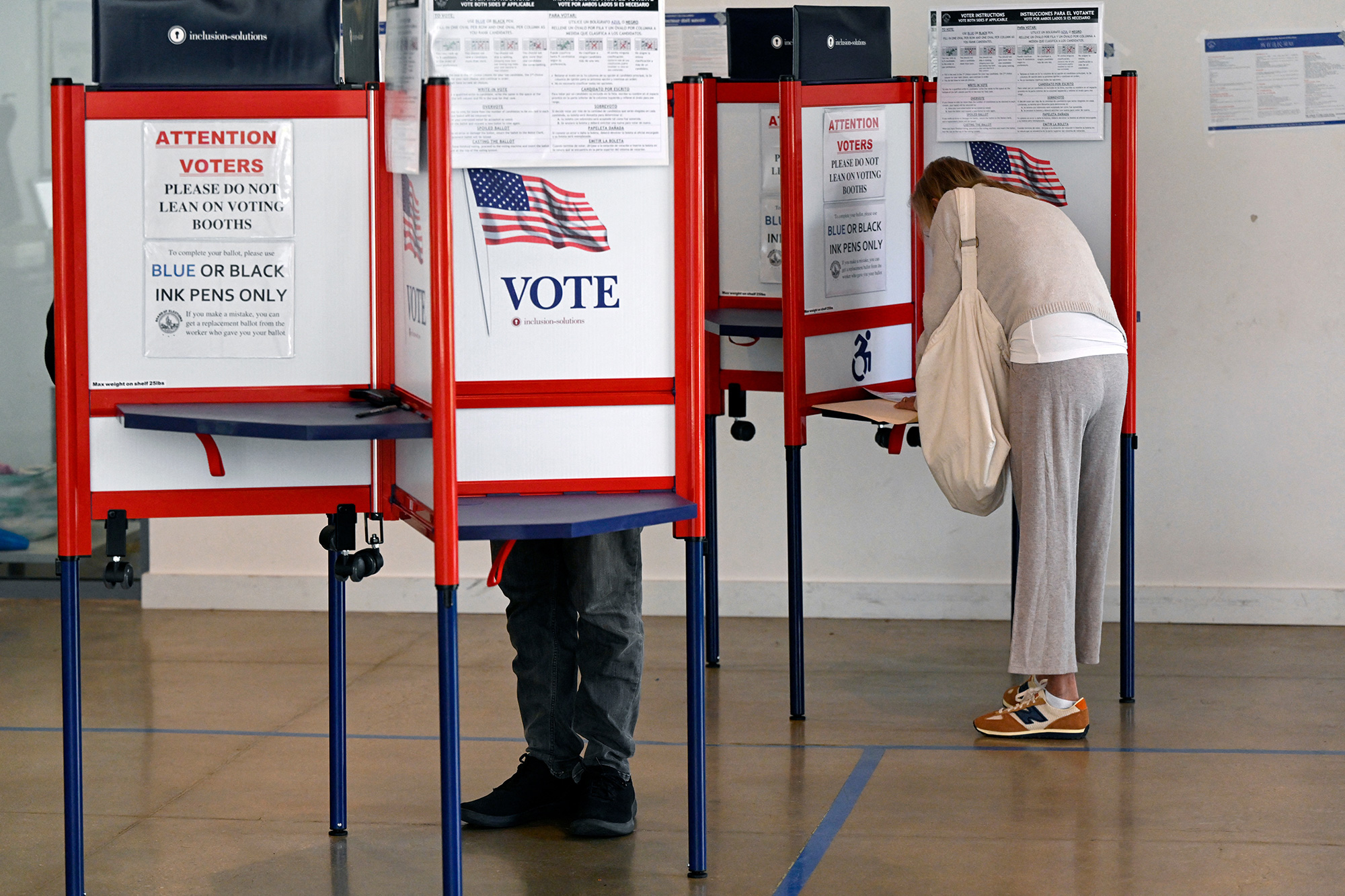
About 123.5 million Americans voted in the 2026 midterm elections, or 49.1% of eligible voters. That’s the second-highest midterm turnout rate since 1914, behind only 2018, according to preliminary University of Florida Election Lab estimates.
Exit polls show most groups moved towards Democrats compared with 2024, with a few notable exceptions. Here’s who turned out, how key groups voted, the biggest surprises, and what exit polls can’t tell you.
The Turnout
- A record number of ballots. About 123.5 million ballots have been counted, or 49.1% of eligible voters (UF Election Lab, as reported by Yahoo News).
*That’s up from 112 million in 2022 and 118.6 million in 2018 (KCRA).
- Second only to 2018. Only the 2018 midterm had a higher turnout rate in more than a century, according to UF political scientist Michael McDonald (Brennan Center via Political Wire).
- Senate battlegrounds led. Maine (65.7%), Minnesota (65.2%) and Michigan (63.2%) had the highest turnout. All three held competitive Senate races (Political Wire).
- Iowa set a modern record. More than 1.38 million Iowans voted, the state’s largest midterm turnout in three decades (Iowa Capital Dispatch).
How groups shifted

The Biggest Surprises
- Young voters didn’t turn out more. Despite their huge swing, voters under 30 were about 11% of the electorate, down from 12% in 2022 (Axios). Their impact came from how they voted, not how many showed up.
- Men flipped. Men went from favoring Republicans by 12 points in 2024 to backing Democrats 50% to 48% (NBC News exit poll).
- Latino early turnout tripled in North Carolina. Early voting by Latino voters there grew 211% over 2022, according to the Southern Coalition for Social Justice (Spectrum News).
- Latino party ties shifted back. Democrats’ edge in Latino party identification grew from 10 points in 2024 to 17 points this year, reversing a decline that began in 2018 (NBC News).
- Older voters held steady. Every large group moved toward Democrats, but voters 65 and older moved just 1 point (NBC News exit poll).
What Exit Polls Can’t Tell You
- They’re surveys, not counts. Exit polls estimate how groups voted. Final certified results can differ.
- Numbers get revised. Pollsters reweight results to match the vote count. NBC’s Latino figure, for example, moved from 62% Democratic on election night (NBC News) to 64% in its latest release (NBC News exit poll).
- Polls don’t always match. NBC, CNN and AP each run their own surveys with different methods, so numbers vary by source (CNN).
- A House vote isn’t a presidential vote. Comparing 2026 House races with the 2024 presidential race shows direction, not an exact apples-to-apples change.
- Turnout isn’t final. Totals are still estimates. California and Washington accept mail ballots postmarked by Election Day, so counts there will rise (UF Election Lab).
Conclusion
More than 123 million Americans showed up, the second-highest midterm turnout rate in more than a century. And they didn’t just show up. They moved.
Young voters swung 37 points. Latino voters swung 25. Men went from a double-digit Republican lean to a narrow Democratic edge. Only seniors, the biggest bloc of all, stayed put.
If 2026 proved anything, it’s that no voting bloc is locked in. Groups that shifted one way in 2024 shifted right back two years later, and the race to win them over for 2028 starts now.





You must be logged in to post a comment.