


Both parties agree America takes too long to build things. This week, the Senate decides whether to do something about it.
The Senate is expected to hold its final vote this week on the Bipartisan American Affordability and Jobs Act. It is a sweeping overhaul of how the federal government approves power lines, pipelines, solar farms, bridges, and other big projects. Final passage and amendment votes are slated for this week.
It is one of the few major bipartisan deals left on the table before Democrats take control of Congress in January. Here’s what’s in it.
Why It Matters
- Building takes years. Big projects need federal permits. Getting them can cause years of environmental review, then years of more lawsuits after approval.
- Demand is climbing. New power plants and transmission lines face yearslong delays connecting to the power grid as electricity demand from data centers and other users rises.
- Bills are rising. Anger over data centers and higher electric bills was a factor in this month’s midterms. Too few power lines is part of the problem: when the grid can’t move cheap power where it’s needed, customers pay for pricier local power. That cost topped $17 billion in 2025, according to the energy consulting firm Grid Strategies.
- The goal is simple. Mike Lee (R-Utah), the Energy Committee chair, put it this way: “we want to make it easier in America to build things.”
What’s in the bill
- Who wrote it. Two Republicans and two Democrats: Shelley Moore Capito (R-W.Va.), Mike Lee (R-Utah), Sheldon Whitehouse (D-R.I.) and Martin Heinrich (D-N.M.). They lead the two committees that oversee permitting. With 60 votes needed to pass the Senate, authors from both parties give it a real shot.
- A clock on lawsuits. Most challenges to a project’s environmental review would have to be filed within 150 days of approval. Challengers would generally need to have raised their concern during a public comment. Lawsuits can stall a project for years after it is approved. A deadline gives builders certainty, though critics say it limits the public’s ability to push back.
- Deadlines for reviews. The bill sets firm deadlines for each step of the federal environmental review process. Open-ended reviews add time and cost, and predictable timelines make projects easier to plan and finance.
- Permits that stick. Once a project has its federal permits, agencies generally could not pull or change them, barring court orders, fraud or serious violations. That protects approved projects from being reversed when a new administration takes over. Wind and solar developers pushed for this after the Trump administration moved against offshore wind, but it would protect pipelines and other projects under future administrations, too.
- More power lines. The Federal Energy Regulatory Commission (FERC) would get broader authority to approve large interstate transmission lines, with costs split by who benefits. New power plants are waiting years to connect to the grid, and lines crossing several states are among the hardest projects to get approved.
- Data centers pay their own way. Data center operators would cover the full cost of the power infrastructure they need. Data centers are a big driver of rising power demand, and this keeps those costs off household electric bills.
- Help for farmers. Clean Water Act permits for farmers would run 10 years instead of five. That means renewing half as often, with less paperwork and less time dealing with federal agencies.
Who’s for it, who’s against it

- An unusual coalition. Supporters include the American Petroleum Institute, the American Clean Power Association, the Solar Energy Industries Association and building trades unions. Oil and gas, renewables and labor rarely line up together.
- Broad Senate support, for now. The Senate voted 73-25 to take up the bill on Nov. 9. That was a procedural vote to start debate, not a vote on the bill itself. Senate passage still takes several more steps: votes on amendments, a second 60-vote test to end debate, then a final passage vote. If it clears the Senate, the House must pass the same text before it can go to President Trump. Many of those yes votes were tentative.
- Environmental concerns. Critics argue the bill weakens environmental protections and limits tribal input.
- Tribal concerns. Catherine Cortez Masto (D-Nev.) has switched to voting no, citing tribes’ concerns about the historic preservation changes. Sen. Lisa Murkowski (R-Alaska) has raised similar concerns.
What happens next
- Final Senate vote. The bill cleared its last 60-vote hurdle, 65-31, on Wednesday. A final vote could come as soon as Thursday or early Friday, and needs only a simple majority. The main fight left is over historic preservation. Current law requires federal agencies to weigh a project’s impact on historic and sacred sites and consult with tribes. Critics say the bill narrows that review, while supporters say it writes tribal participation into law for the first time. Nearly 30 Democrats back an amendment from Sen. Adam Schiff (D-Calif.) to strike those changes.
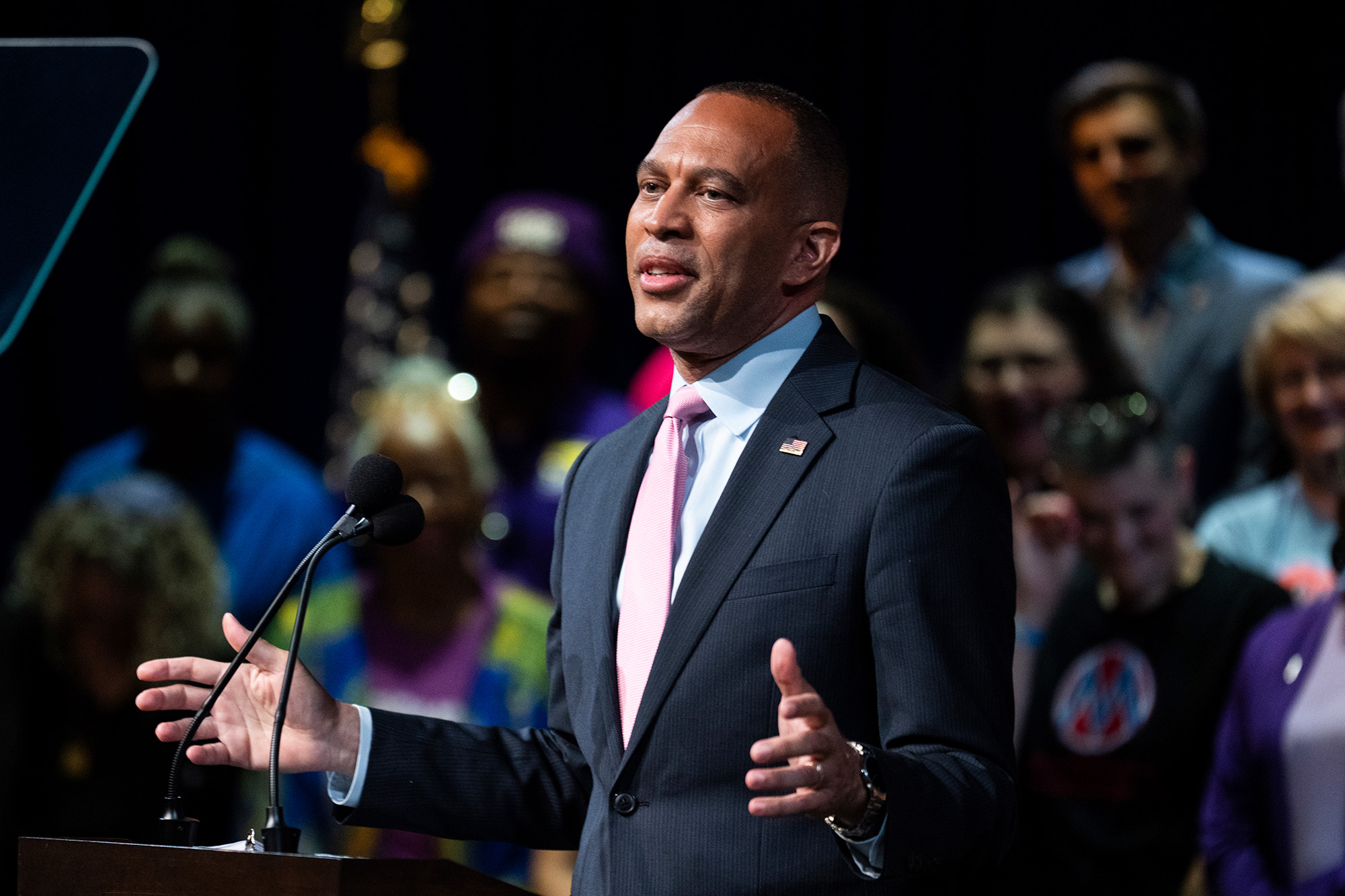
- Then the House. Speaker Mike Johnson (R-La.) supports the bill and expects the votes to pass it. But Democratic Leader Hakeem Jeffries (D-N.Y.) opposes it as written, and Energy and Commerce Chair Brett Guthrie (R-Ky.) wants changes. Any House changes would send the bill back to the Senate.
- The clock is short. The current Congress ends at noon on Jan. 3, 2027. Anything unfinished starts over in a Democratic-led Congress.
Conclusion
Both parties agree that building in America takes too long. The fight is over how much review to trade for speed, and whether to close the deal now or start fresh in January.
Either way, this week’s vote is a test of whether a lame-duck Congress can still deliver a bipartisan win.



You must be logged in to post a comment.