


America’s aging air traffic control system needs an overhaul. But after a nationwide flight disruption, lawmakers in both parties are questioning the Trump administration’s request for another $50 billion, particularly when billions in previously approved funding remain unspent.
The Trump administration is requesting $50.1 billion to modernize America’s aviation infrastructure following a nationwide ground stop on November 13, 2026. The outage disrupted thousands of flights and exposed vulnerabilities in the Federal Aviation Administration’s (FAA) aging technology.
But Congress already approved $12.5 billion for air traffic control modernization in July 2025, and only about $1 billion had been spent as of mid-November 2026.
That gap has drawn scrutiny from Republicans and Democrats alike. While lawmakers generally agree that the FAA needs upgrades, many want clearer answers about what caused the outage, how much additional funding is necessary, and how the money would be spent.
Why Did the FAA Ground Flights Nationwide?
On November 13, the FAA halted departures nationwide for nearly five hours after a telecommunications failure disrupted air traffic control operations across the country.
The disruption affected 17 of the FAA’s 22 regional air traffic control centers, causing instability in radio communications and radar feeds
The agency ordered the ground stop as a safety precaution. Approximately 3,500 aircraft already in the air continued to their destinations and landed safely.
According to the FAA, airlines canceled roughly 12,500 flights that day, although not all cancellations were directly attributable to the ground stop.
What Caused the FAA Outage?
The outage began during routine work to replace aging telecommunications equipment, but investigators have not yet determined the precise technical failure.
The FAA says its contractor, L3Harris, had been installing a new router at a communications facility in Arkansas as part of efforts to replace outdated copper communications infrastructure.
During the work, excessive data flooded the FAA’s telecommunications network, overwhelming older equipment and disrupting communications and radar systems.
On November 17, Transportation Secretary Sean Duffy said investigators had reproduced the malfunction but still had not established its root cause
The incident highlighted a longstanding problem: America’s air traffic control infrastructure relies on decades-old technology that is becoming increasingly difficult to maintain.
Does the FAA Still Use Floppy Disks?
Yes. Some air traffic control facilities still rely on computer systems that use floppy disks to store and load critical information, including weather-related data.
In fact, the FAA only announced the beginning of its floppy-disk replacement program on November 5, just days before the nationwide outage. The agency expects to install its new information-display system at 435 facilities by the end of 2028.
Floppy disks are just one example of the system’s age. Some facilities also rely on outdated computers, aging copper communications lines, and paper flight strips.
While floppy disks were not implicated in the November 13 outage, the incident renewed attention on the urgent need for modernization.
Why Is the Trump Administration Requesting $50 Billion for FAA Modernization?
The administration says it needs an additional $50.1 billion to replace outdated technology, modernize air traffic control facilities, and improve airport infrastructure.
On November 12, the administration requested approximately $30 billion in additional funding. After the nationwide ground stop the following day, Sec. Duffy increased the request to $50 billion.
According to the administration’s November 17 funding proposal, the money would be divided into five major categories:
- $10.1 billion for air traffic control software, telecommunications, and other technology upgrades.
- $10 billion for improvements to aging airport infrastructure.
- $10 billion to modernize airport terminals.
- $10 billion to construct five new consolidated regional air traffic control centers.
- $10 billion to construct or improve as many as 140 air traffic control towers.
But the administration’s request has raised another question: What happened to the billions Congress already approved?
What Happened to the $12.5 Billion for FAA Modernization?
Congress approved $12.5 billion for air traffic control modernization in July 2025, through Republicans’ “One Big Beautiful Bill.”
But so far, only $4.3 billion has been obligated and only about $1 billion has actually been spent.
Those figures come from Reps. Rick Larsen (D-WA) and André Carson (D-IN), senior Democrats on the House Transportation and Infrastructure Committee, who questioned the administration’s request for additional funding.
There’s an important distinction between money that has been appropriated, obligated, and spent. Appropriated means Congress has made the money available. Obligated means the government has legally committed to spending it, such as by signing a contract to purchase equipment. Spent means the government has actually paid out the money.
Of the $12.5 billion Congress appropriated for air traffic control modernization, roughly $11.5 billion has not yet been spent – including $8.2 billion that hasn’t even been committed for spending.

Sec. Duffy argues that the entire $12.5 billion has already been assigned to modernization projects, even if much of it has not yet been obligated or paid out.
He explained that specialized equipment, including radar systems, must first be ordered and manufactured before the government can take delivery and pay for it. The administration expects to complete the projects supported by the original funding by the end of 2028.
Still, the FAA’s modernization efforts have faced scrutiny beyond the current funding debate.
A September 2026 GAO report found that the agency lacked a comprehensive estimate of modernization costs and an integrated schedule for completing its projects. The watchdog warned that inadequate planning could lead to further delays, cost overruns, and operational disruptions.
Both Parties Question the Additional Funding
Republicans and Democrats alike acknowledge the need to modernize air traffic control, but many are questioning whether the administration has adequately justified its $50 billion request.
After Sec. Duffy met with Senate Republicans on November 17, several expressed skepticism about the proposed spending.
“I don’t think the full $50 billion will be funded. Some of that is not safety related,” said Sen. Ted Cruz (R-TX), chairman of the Senate Commerce Committee. Cruz argued that Congress should prioritize air traffic control safety upgrades over broader airport improvements.
Other Republicans questioned who should pay for the upgrades. Sen. Rick Scott (R-FL) suggested that airlines should shoulder more of the cost, saying “I don’t understand why the airline industry is not paying for this.”
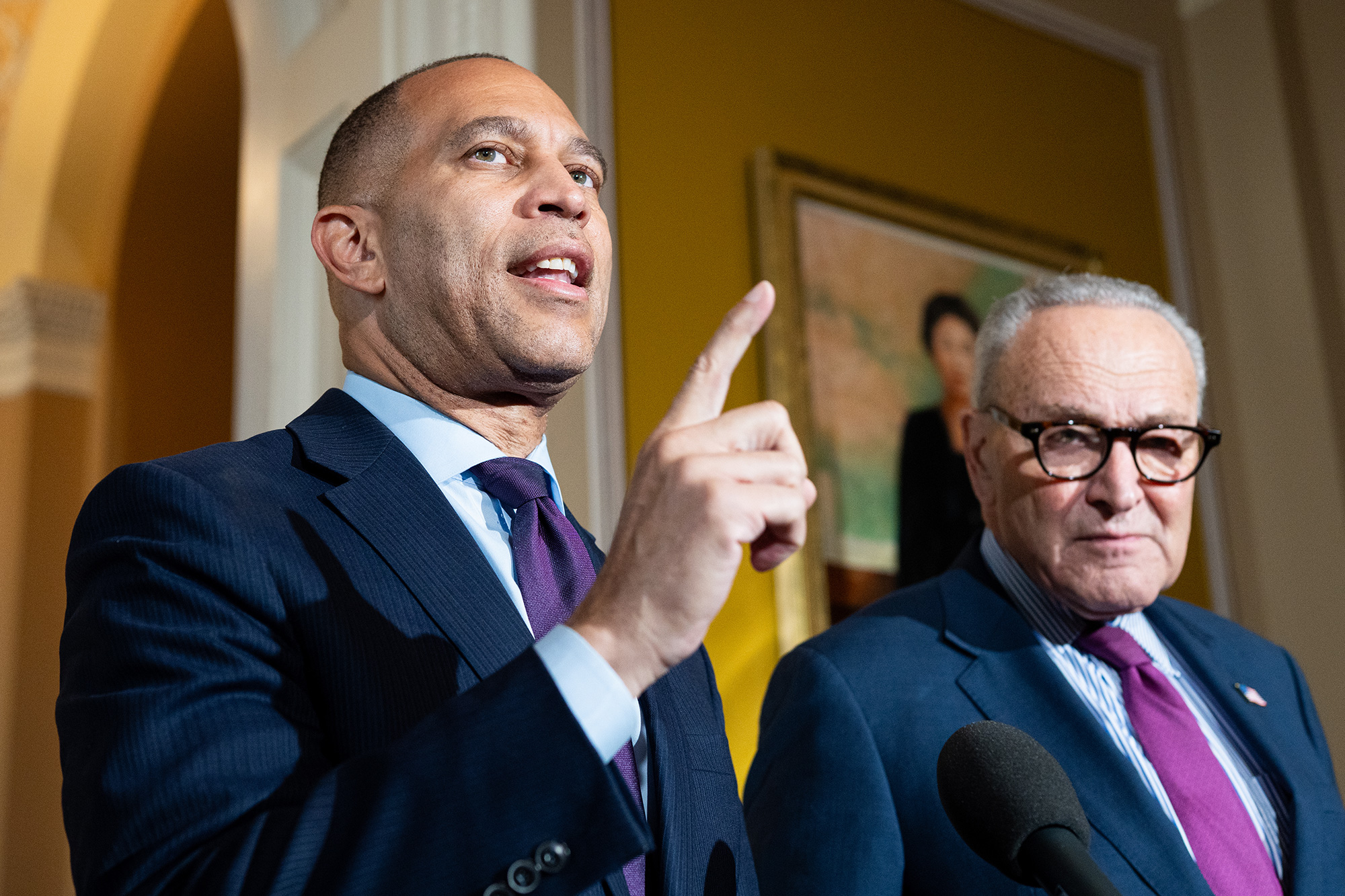
Democrats, meanwhile, have focused on the billions Congress already approved. “We want to give them all the money they need, but they’ve got to use it, and know how to implement it, and they don’t,” said Senate Minority Leader Chuck Schumer (D-NY) on November 16.
In a separate letter, 13 Democrats on the Senate Commerce Committee demanded a full explanation of the November 13 outage and how additional funding would address the vulnerabilities that caused it.
What’s Next for FAA Modernization?
Congress could approve additional FAA funding with a standalone bill, but it’s more likely to be included as part of a broader government spending package before the December 11 deadline or through next year’s Department of Transportation budget.
Lawmakers still have to agree on how much to spend and where the money should go. But with both parties recognizing the need for upgrades, there’s a chance for Republicans and Democrats to work together to bring America’s air traffic control system into the 21st century.




You must be logged in to post a comment.